SPARC vs Ryarc: Digital Signage Platforms Compared
Enterprise platform built for airports, broadcast networks, and large-scale US/Middle East deployments. If you're evaluating a Ryarc alternative, compare features, pricing, sync capabilities, and which solution fits your enterprise deployment needs.

SPARC vs Ryarc: Digital Signage at a Glance
| Feature | SPARC | Ryarc |
|---|---|---|
| Pricing | From $15 AUD/screen/month, 14-day free trial | Contact sales — no public pricing |
| Free Trial | 14-day self-serve, no credit card | Demo call required |
| Australian Data Hosting | AWS Sydney (ap-southeast-2) | Not specified for AU |
| AUD Pricing | ✓ — no FX risk | ✗ — USD billing |
| AEST Support | ✓ — Australian time zones | ✗ — US/offshore hours |
| Self-Serve Onboarding | ✓ — start in minutes | ✗ — requires contact |
| AI Audience Analytics | ✓ | Camera vision (enterprise add-on) |
| Setup Complexity | Low — SaaS, browser-based | High — modular + customisation required |
| Best For | Australian businesses | Airports & broadcast networks |
Which digital signage platform should you choose?
TL;DR — Which platform should you choose?
Choose SPARC if...
Choose SPARC when you want a self-serve free trial, AUD pricing tailored to your screen count, and an Australian-owned platform that keeps your data in AWS Sydney. SPARC is purpose-built for Australian businesses — government, healthcare, retail, corporate — with AUD pricing, AEST support, and APP compliance out of the box. No enterprise procurement process before you can try it. Start today.
Choose Ryarc if...
Choose Ryarc if you are deploying a network of thousands of screens for an airport, broadcast facility, or ATSC 3.0 datacasting operation and require their specific AD auction or zero-cellular broadcast modules. Ryarc's modular enterprise platform is purpose-built for that use case.
Key Differentiator
Ryarc is an enterprise platform built for airports and broadcast networks. Their headline deployments are Abu Dhabi Airport and a 15,500-screen mega-network in Saudi Arabia. SPARC is built for Australian businesses. Transparent pricing from $15/screen/month AUD. Self-serve trial on the website. Australian data hosting. AEST support. If you need to run a digital signage network for your business — not a broadcast infrastructure project — SPARC is the straightforward choice.
Ryarc is a foreign digital signage platform. SPARC is not.
For Australian enterprise, government, healthcare, and financial services buyers, four factors make the choice straightforward — regardless of feature parity.
Your data stays in Australia
SPARC is hosted on AWS Sydney (ap-southeast-2). Your content, audience data, and configuration never leave Australian jurisdiction. Ryarc is headquartered overseas — data residency is offshore by default.
Australian Privacy Principles compliantAUD pricing — no currency risk
SPARC invoices in Australian dollars. Your budget is certain across the financial year. Ryarc prices in foreign currency — exchange rate swings directly affect your SaaS spend with no hedging mechanism.
Billed in AUD · GST-ready invoicesSupport in your time zone
SPARC's team operates in AEST business hours. When something urgent happens at 9am on a Monday in Sydney, you're not waiting for another continent to start its day. Ryarc support operates from offshore time zones.
AEST business-hours supportRegulated sector compliance
Australian government, healthcare, and financial services procurement often mandates Australian data hosting. SPARC meets that requirement as standard. Offshore SaaS may require a costly data residency exemption — or fail the tender entirely.
Government · Health · Finance readySPARC vs Ryarc: Feature Comparison
What SPARC Does Better
Try It Before Any Sales Process
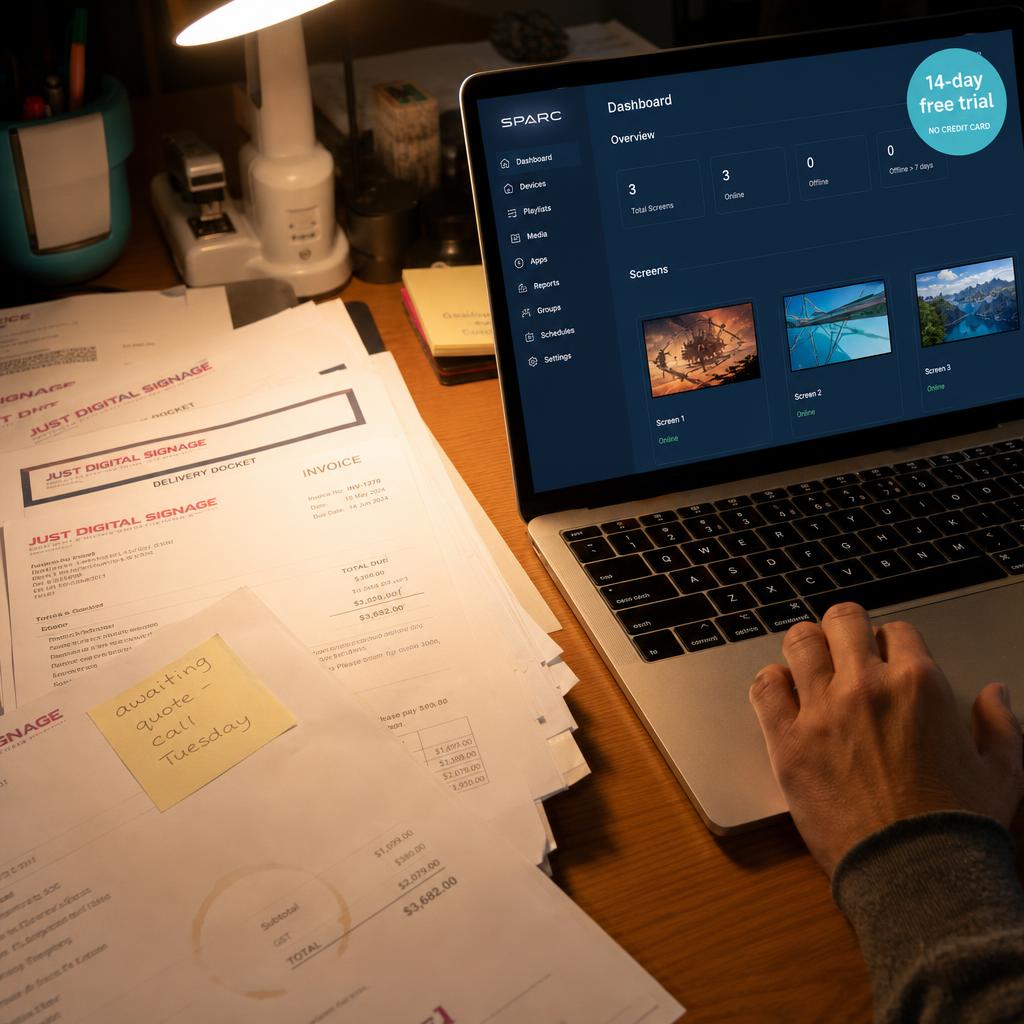
Start a 14-day free trial today — no credit card and no sales call needed to get in. Plans start from $15 AUD/screen/month, quoted to your screen count, with the CMS included in every plan.
Ryarc has no public pricing. Their website directs all enquiries to a 'Get Pricing' contact form. Evaluating Ryarc requires entering a sales process before you can see a number.
Why It Matters
Every day spent waiting for a quote is a day your screens aren't working. Procurement teams that need a number for a budget approval can't get one from Ryarc without entering a full sales cycle. SPARC's pricing is on the page.
Use Cases
- Finance teams that need a per-screen cost to include in a business case
- Operations managers who want to evaluate software before committing to a vendor conversation
- Procurement teams comparing options for a formal tender
- SME owners who need to know what they're signing up for before calling anyone
Modern Australian SaaS — Self-Serve From Day One
SPARC is 100% Australian-owned, headquartered in Melbourne, and hosted exclusively on AWS Sydney (ap-southeast-2). Published AUD pricing, a self-serve free trial, AEST support, and Australian Privacy Principles (APP) compliance built in — a modern cloud platform you can evaluate and deploy yourself.
Ryarc is an established Australian company (Sydney, founded 2003) — but its platform is built for large-scale global enterprise and broadcast: ATSC 3.0 datacasting, an AD auction marketplace, and airport/DOOH networks across the Middle East, Asia, and North America. Pricing is quote-only, and onboarding runs through an enterprise sales and professional-services process.
Why It Matters
Both companies are Australian — so the real difference is the model, not the flag. SPARC gives you published AUD pricing, a self-serve trial, and a platform your marketing team runs without an integrator. Ryarc's enterprise/broadcast model means a sales cycle, a scoping process, and a quote before you can even see a number.
Use Cases
- Government agencies requiring documented Australian data residency for procurement compliance
- Healthcare organisations under the Australian Privacy Act with data handling requirements
- Financial services firms with APRA-aligned data sovereignty obligations
- Enterprise procurement teams requiring published security and compliance documentation
Start Today — No Enterprise Procurement Required
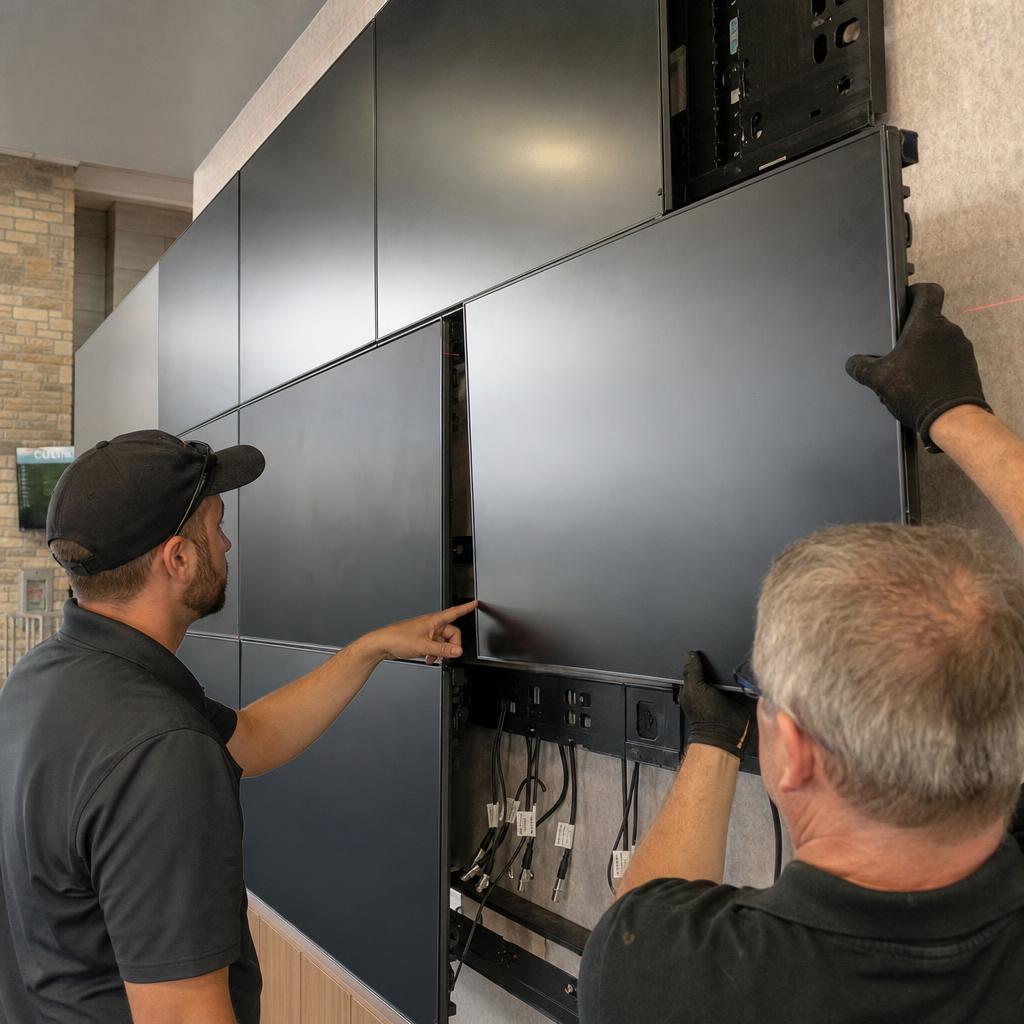
Visit mysparc.app, start a 14-day free trial, and have screens live before the end of the week. No customisation required. No IT project. No professional services engagement. Browser-based setup that your marketing team can manage without calling anyone.
Ryarc's platform is explicitly modular and requires customisation. Their products page lists 'Customization' as a core offering. Getting started involves a demo call, a scoping process, a quote, and a professional services engagement before any screens go live.
Why It Matters
The implementation complexity of an enterprise platform designed for 15,500-screen airport networks is not appropriate for most Australian business deployments. SPARC is purpose-scoped — powerful enough for enterprise multi-site networks, simple enough to start this week.
Use Cases
- Marketing teams that need screens live before a campaign launches
- IT managers who don't have capacity for a multi-month enterprise software implementation
- Franchisees and multi-site operators adding screens to new locations without a new project
- Healthcare and government teams running a formal pilot before a wider rollout
Purpose-Built for Australian Business — Not Broadcast Infrastructure
SPARC is designed for the use cases Australian businesses actually have: retail, healthcare, corporate, government, hospitality, QSR, education. AI audience analytics, software video walls, environment orchestration, and AUD SaaS pricing — purpose-scoped for the Australian mid-market and enterprise.
Ryarc's flagship features — ATSC 3.0 datacasting, AD auction, zero-cellular broadcast, and IoT sensor networks — are purpose-built for US broadcast TV infrastructure and large-scale global enterprise. ATSC 3.0 is the American next-generation broadcast TV standard. It has no deployment relevance in Australia.
Why It Matters
A platform optimised for US airport broadcast networks carries the complexity of that use case even when you only need to manage screens in your Australian retail stores. You're buying features you'll never use and paying for the complexity they add.
Use Cases
- Retail chains that need content management and audience analytics — not broadcast datacasting
- Healthcare facilities that need wayfinding and communication screens — not AD auction platforms
- Corporate offices that need room signage and lobby displays — not zero-cellular broadcast infrastructure
- Government buildings that need compliant Australian-hosted signage — not ATSC 3.0 television networks
What Ryarc Does Better
Massive Scale Infrastructure (10,000+ Screen Networks)
SPARC scales effectively for Australian enterprise deployments. For ultra-large global networks of 10,000+ screens requiring broadcast-grade distribution, SPARC's architecture may require further assessment.
Ryarc's Campaign Manager is proven at extreme scale — their documented deployments include 15,500 screens across 355 locations. For organisations deploying at that order of magnitude with broadcast distribution requirements, Ryarc has validated infrastructure.
Why It Matters
If your deployment is measured in tens of thousands of screens distributed via ATSC 3.0 broadcast or zero-cellular networks, Ryarc's proven scale at that tier is a genuine differentiator. Virtually no Australian business requires this.
Use Cases
- National broadcast networks deploying content via ATSC 3.0 infrastructure
- Stadium and arena networks at 5,000+ screen scale
- Government broadcast infrastructure projects
On-Premise Multi-Tenant Deployment
SPARC offers hybrid cloud/on-premise options. For organisations requiring full on-premise multi-tenant infrastructure with zero cloud dependency, SPARC's primary architecture is cloud-native.
Ryarc offers fully on-premise multi-tenant deployment as a core product option — useful for organisations that require complete control over infrastructure with no cloud dependencies.
Why It Matters
Regulated industries or security-classified environments requiring fully air-gapped on-premise signage infrastructure with multi-tenant separation may find Ryarc's on-premise model relevant.
Use Cases
- Defence and intelligence facilities requiring air-gapped deployments
- Highly regulated financial institutions with zero-cloud mandates
- Government infrastructure with classified network requirements
SPARC works with your existing hardware — no Ryarc-specific players required.
Ryarc's platform supports Raspberry Pi through to Windows and Android. SPARC supports all of the same hardware and more — hardware-agnostic by design. If you have screens and players already deployed, SPARC layers on without replacement. No new hardware purchase required to start.
Already have screens installed? SPARC runs on existing hardware — start your trial today.
Windows
x86 PCs & mini PCs
Android
All major SOC players
Chrome OS
Chromeboxes & sticks
LG webOS
Commercial displays
Samsung Tizen
Smart Signage Platform
Philips SoC
Professional displays
BrightSign
Via SPARC software layer
Raspberry Pi
Linux-based players
Linux
x86 & ARM
Which digital signage platform fits your use case?
Real-world scenarios comparing SPARC and Ryarc
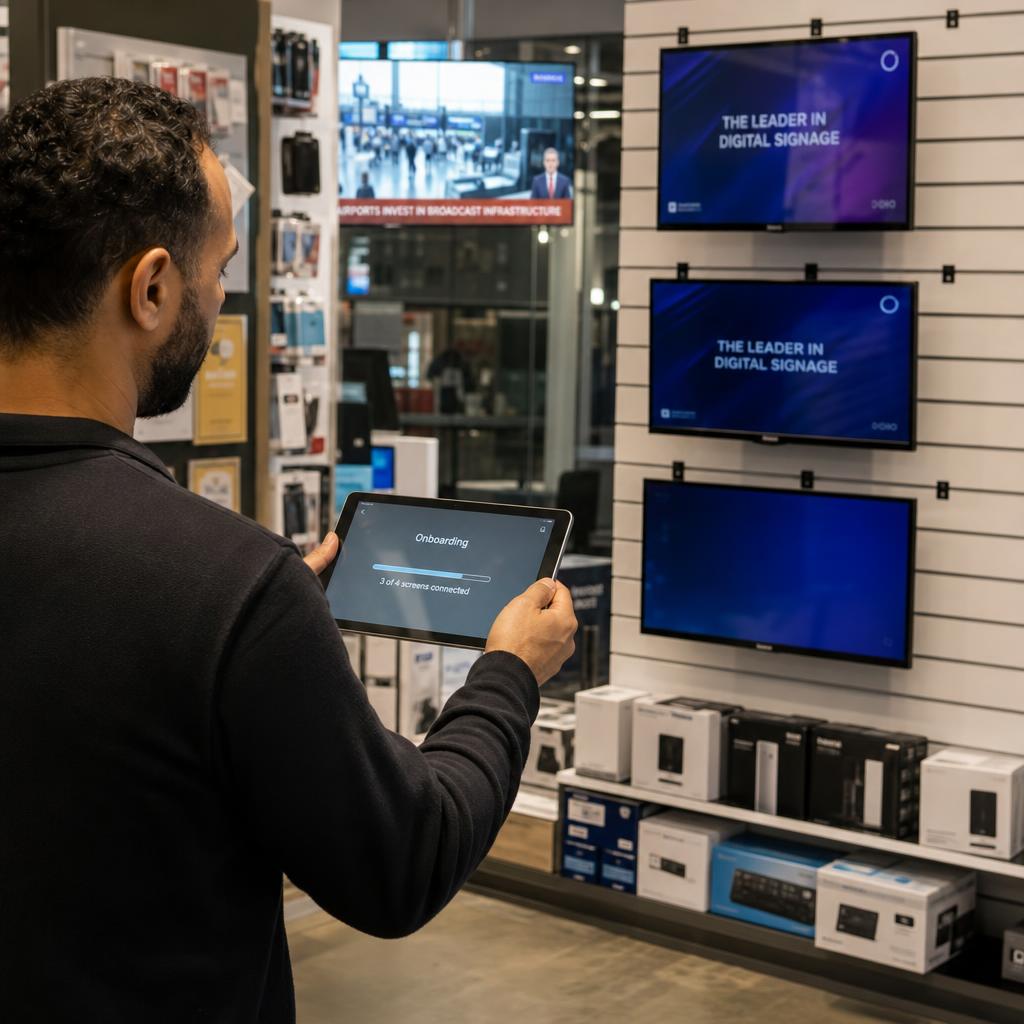
Australian Retail Chain (20+ Locations, 100+ Screens)
SPARC Advantage
One dashboard manages all locations. Marketing team deploys campaigns in minutes. AI analytics deliver foot traffic, dwell time, and demographic data per screen. AUD pricing with no FX risk. AEST support during business hours.
Ryarc Consideration
Ryarc requires a sales process to get a price, professional services to implement, and has no published Australian hosting or AUD pricing. The implementation overhead and ongoing complexity are not justified for a standard retail signage deployment.
Australian Government or Healthcare Procurement
SPARC Advantage
AWS Sydney hosting documented and verifiable. APP compliance built in. AUD pricing with no currency risk. AEST support with enterprise SLA. Published security documentation for procurement.
Ryarc Consideration
Ryarc's site is enterprise- and globally-focused, so Australian data-residency, APP, and support documentation aren't foregrounded for self-serve evaluation — procurement teams typically need a sales conversation to obtain it.
Airport or Broadcast Network (1,000+ Screens, ATSC 3.0 Required)
SPARC Advantage
SPARC scales for enterprise Australian deployments but does not offer ATSC 3.0 datacasting or AD auction modules — these are US broadcast infrastructure features with no Australian market relevance.
Ryarc Consideration
Ryarc's Campaign Manager is purpose-built for this use case. If ATSC 3.0, zero-cellular broadcast, or AD auction are genuine requirements, Ryarc has the validated infrastructure.
Corporate Multi-Site Network (5–50 Locations)
SPARC Advantage
Start with a self-serve trial today. AUD pricing. One dashboard for all locations. AI analytics to prove ROI. No enterprise procurement process required.
Ryarc Consideration
Ryarc requires a full enterprise sales and implementation cycle for a deployment that SPARC handles with self-serve setup. The complexity-to-value ratio is unfavourable for standard corporate signage.
Switching from Ryarc to SPARC
Migration path, timeline, and what to expect
Why Customers Migrate from Ryarc
Couldn't get a price without entering a sales process
- No public pricing meant weeks of sales qualification before a number was available
- Budget approval required a cost — Ryarc couldn't provide one without a full scoping call
- Competitor evaluation stalled while waiting for Ryarc to respond with a quote
Implementation complexity exceeded the deployment requirements
- Modular customisation required a professional services engagement before go-live
- Platform built for 15,000-screen airport networks — overkill for 50 screens in 10 locations
- IT team didn't have capacity to manage an enterprise software implementation project
Wanted a modern self-serve platform, not an enterprise project
- Needed a starting price to build a business case without a multi-week sales process
- Wanted to trial the platform before committing to a vendor conversation
- Preferred a browser-based SaaS the marketing team could run without a professional-services engagement
Typical 90-Day Migration Timeline
Assessment
- Current state analysis
- Gap analysis
- ROI modeling
- Pilot location selection
Pilot Deployment
- Install SPARC at 1–3 locations
- Run parallel with existing system
- Train pilot team
- Measure improvements
Content Migration
- Automated content import
- Template conversion
- Integration testing
- User acceptance testing
Full Rollout
- Phased deployment
- Cutover scheduling
- Final training
- Post-deployment optimization
Digital signage migration is included
White-glove migration from Ryarc to SPARC, at no extra cost
What's Included
- Dedicated migration project manager
- Automated content import (no manual rebuild)
- Integration preservation (APIs reconnected)
- Training for all user levels
- 90-day enhanced support post-launch
- Parallel run period (zero risk)
Common Concerns Addressed
"We've invested heavily in Ryarc content"
We import existing content automatically. Templates convert to SPARC format. Design investment preserved.
"Our team knows Ryarc inside and out"
4-hour training gets teams productive. Most users say SPARC is easier after the adjustment period.
"Downtime during migration is unacceptable"
Pilot approach means zero downtime at production locations until you're confident. Cutover happens location-by-location.
Real-world digital signage migration results
Australian Enterprise Healthcare Network (8 Facilities, 160 Screens)
Previously on: Ryarc Campaign Manager (enterprise quote)
Migration Trigger
The procurement team received a Ryarc quote after a three-week sales process. The implementation proposal included professional services, custom module configuration, and a six-month go-live timeline. The finance team couldn't approve USD billing. The compliance team couldn't verify Australian data residency. The IT team didn't have capacity for a six-month implementation project. A team member found SPARC, saw AUD pricing on the website, started a free trial that afternoon, and had screens live the following week.
SPARC Implementation
- Self-serve trial started same day — no sales call, no quote process
- Existing Android players connected to SPARC without hardware replacement
- Australian data residency documentation provided for compliance team within 24 hours
- AUD pricing approved by finance team from the public pricing page
- 160 screens across 8 facilities live within two weeks
| Metric | Before | After (SPARC) |
|---|---|---|
| Time to First Screen Live | 6 months (Ryarc implementation estimate) | Same week (SPARC self-serve) |
| Pricing Visibility | 3-week sales process for a quote | Public website — immediate |
| Data Residency Compliance | Not verifiable (Ryarc) | AWS Sydney — documented and verified |
| Billing Currency | USD (rejected by finance) | AUD — approved same day |
SPARC vs Ryarc FAQs
SPARC vs Ryarc
How does SPARC's pricing compare to Ryarc?
SPARC is priced per screen in AUD — Starter (up to 20 screens) from $15/screen/month and Pro (unlimited) from $25/screen/month, quoted to your deployment — and you can run a 14-day free trial before any pricing conversation. Ryarc has no public pricing; evaluating it starts with a contact-sales process. For most Australian businesses, SPARC's SaaS model is both easier to start and better suited than an enterprise contract.
Where is SPARC's data hosted?
SPARC is hosted exclusively on AWS Sydney (ap-southeast-2), and your data never leaves Australian jurisdiction. For government, healthcare, and enterprise procurement that requires documented Australian data residency and APP compliance, SPARC publishes verifiable documentation you can hand straight to a compliance team.
Can I try SPARC without talking to a salesperson?
Yes. SPARC has a self-serve free trial on the website — no credit card, no sales call, no demo booking required. Ryarc requires a demo booking to begin evaluation. If you want to see the platform before you speak to anyone, SPARC is the only option.
Does SPARC support the same scale as Ryarc?
SPARC scales effectively for Australian enterprise deployments — multi-site networks, video walls, thousands of screens. Ryarc's specific differentiators (ATSC 3.0 datacasting, AD auction, zero-cellular broadcast) are US broadcast infrastructure features with no relevance in the Australian market. For standard Australian commercial signage at any scale, SPARC provides full capability without broadcast infrastructure complexity.
Why is Ryarc's ATSC 3.0 not relevant in Australia?
ATSC 3.0 is the American next-generation terrestrial broadcast TV standard. It is a US infrastructure technology. Australia uses DVB-T2 for digital television broadcast — ATSC 3.0 has no deployment relevance here. Ryarc's headline datacasting capability is a US-market feature that Australian buyers are paying for in complexity without ever using.
Does SPARC have Australian support?
Yes. SPARC's entire support and customer success team operates on AEST business hours, and enterprise SLA tiers guarantee response times during the AEST business day. As a modern SaaS platform, that support is direct — you're not routed through an enterprise account-management layer to log an issue.
Is SPARC a good alternative to Ryarc?
Yes. SPARC is a 100% Australian-owned, self-serve alternative to Ryarc — start a free trial directly on the website with AUD pricing and Australian data hosting, no contact-sales process required to get started.

Try SPARC digital signage free for 14 days
See the difference for yourself
See SPARC in Action
45-minute live demo. Frame-perfect sync, live failover test, content deployment across 1,000+ screens, and industry-specific integrations.
Start Trial