Digital Signage Built for Healthcare Environments
SPARC is medical digital signage software built for hospitals, clinics, and healthcare environments — wayfinding, waiting room information, staff communications, and emergency-relevant messaging, all from one platform hosted on AWS in Sydney. It's a communication layer that sits alongside your facility's actual clinical and safety systems, not a replacement for them.
The Healthcare Digital Signage Challenge
Common pain points that hold healthcare signage back from being genuinely useful to patients, visitors, and staff.
Complex wayfinding in large medical facilities
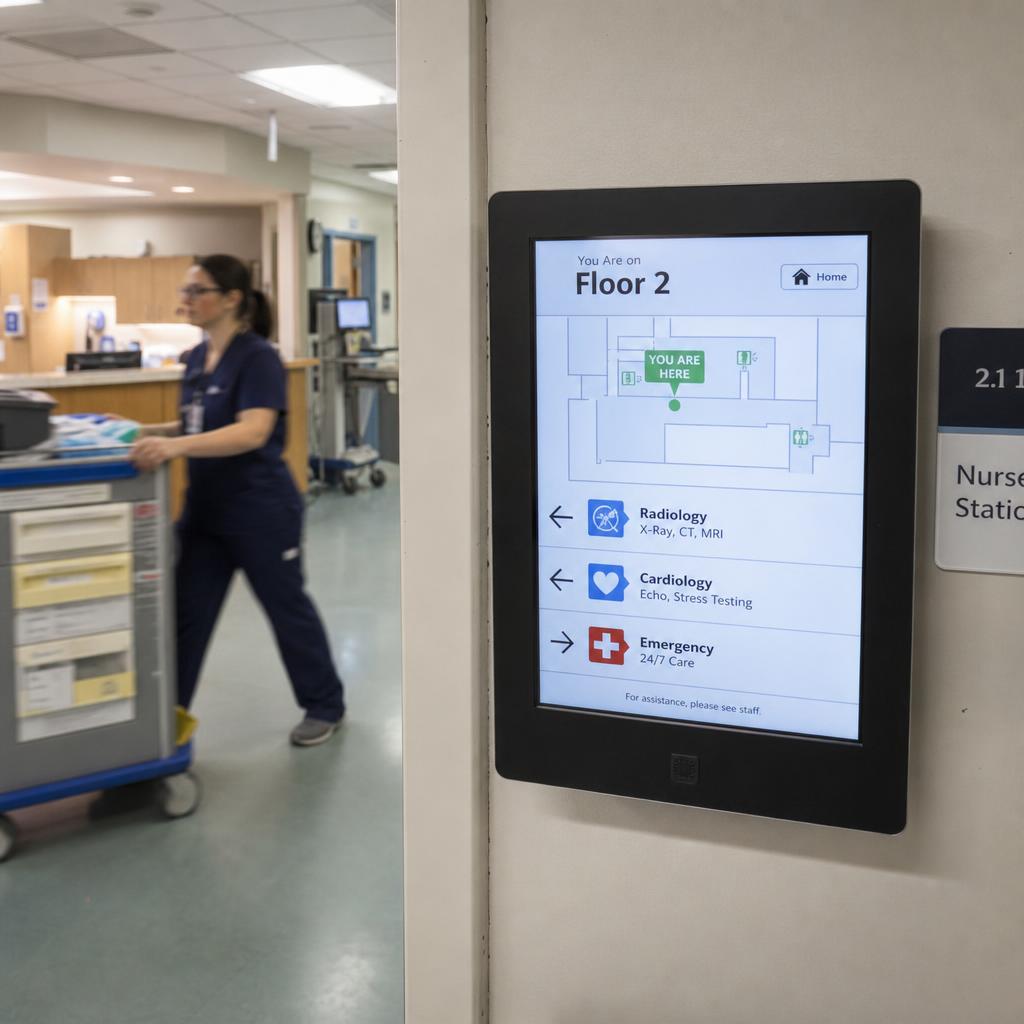
Patients and visitors — often anxious, unfamiliar with the building, and navigating it while worried about someone else — struggle to find their way through sprawling hospital campuses, leading to missed appointments and repeated staff interruptions for directions.
Patient anxiety in waiting areas
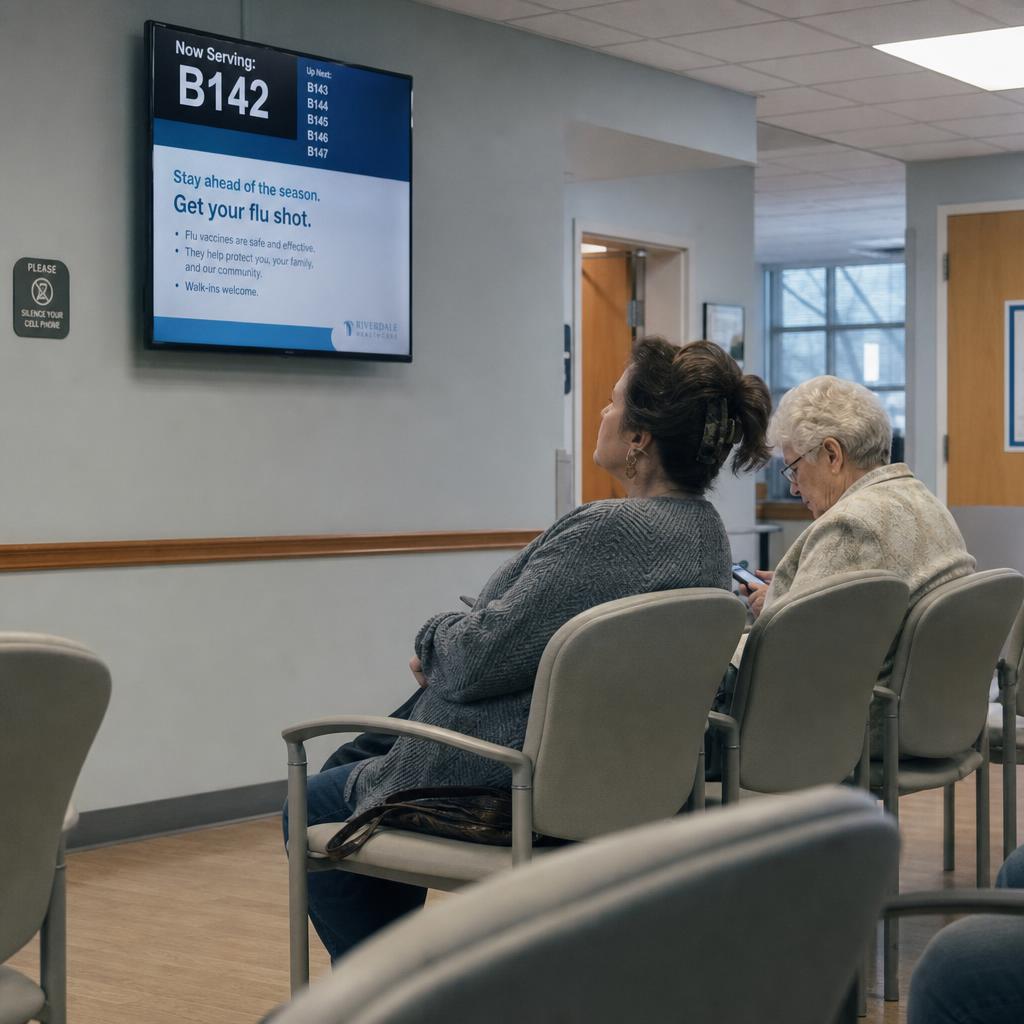
Long wait times with no visibility into queue position or expected wait length add to the stress patients and families are already carrying, on top of whatever brought them in.
Staff communication gaps across shifts
Protocol updates, safety information, and schedule changes don't reliably reach every department and shift when they're buried in email threads nobody has time to read mid-shift.
Signage that can't flex between everyday and priority messaging
Most general-purpose signage platforms can't be trusted to update instantly or hold an override message with authority over local scheduling — a real requirement for a facility that needs signage to shift into priority messaging the moment its incident response requires it.
How SPARC Runs Healthcare & Medical Digital Signage
Purpose-built capabilities for hospitals, clinics, and aged care facilities.
Dynamic Wayfinding
Clear, consistent directional signage for patients and visitors across complex medical campuses — designed for legibility from a distance and at an angle, for people walking past while pushing a wheelchair or a trolley.
Waiting Room Information
Display queue status, general wait-time information, and health education content to help patients and families feel oriented while they wait.
Staff Communication Boards
Displays for shift schedules, protocol updates, and internal communications in break rooms and nurse stations — built into daily operations, so staff are already confident using the platform when something changes quickly.
Australian-Hosted, Privacy-Conscious Architecture
Hosted on AWS infrastructure in Sydney, with role-based access control and audit logging for content changes — designed with the Australian Privacy Principles in mind. Confirm your facility's specific compliance requirements with your own advisor.
Priority and Override Messaging
A small, defined list of authorised users can push a message to some or all screens with priority over whatever's currently scheduled, persisting until deliberately cleared — a convenience layer that sits alongside your facility's actual emergency systems, not a replacement for them.
Patient Education Displays
Health education content, procedure preparation information, and general wellness information in exam rooms and waiting areas.
Healthcare & Medical Digital Signage Outcomes
Australian-hosted infrastructure and data residency
Access control and audit logging for every content change
Typical delay for an authorised priority message to reach screens
Healthcare & Medical Digital Signage Use Cases
Healthcare digital signage FAQs
What is medical digital signage used for?
Medical digital signage covers four main uses: waiting room information and entertainment, wayfinding to help patients and visitors navigate a facility, staff and internal communications (shift handovers, protocol updates, safety alerts), and administrative updates like clinic delays or service changes — all managed centrally instead of via printed signs or a whiteboard.
Can SPARC handle hospital wayfinding as well as waiting room displays?
Yes. SPARC runs both from the same platform — dynamic wayfinding displays that can be updated when a department moves or a wing closes for maintenance, alongside waiting room information screens, without needing separate systems for each.
Is digital signage for hospitals different from digital signage for clinics?
The underlying platform is the same — the difference is scale and content mix. A single clinic typically runs waiting room and appointment information on a handful of screens; a hospital adds facility-wide wayfinding, department-level staff communications, and priority messaging across many more displays. SPARC scales across both without a different product tier.
Does SPARC integrate with hospital emergency or mass-notification systems?
SPARC can integrate with existing mass notification systems, or operate as a standalone priority-messaging layer that overrides all screens with facility-wide alerts within seconds of being triggered.
Can we install healthcare digital signage ourselves?
In a clinical setting, generally not. Screens in wards and corridors involve infection-control requirements, fixings rated for the environment, and electrical work signed off by your facilities team. Our installation partners handle that. Once the screens are in, your communications team runs the content without needing them again.
Who updates content once the screens are installed?
Your own staff, from a browser. Wait times, department notices and health messaging are changed by the people who own that information - no ticket to IT and no call to the installer. Emergency messaging can be pushed to every screen in the building in seconds.
How long does a hospital digital signage rollout take?
The software is configured in days. The schedule is set by the physical work - access to wards, infection-control windows, electrical sign-off and procurement - so a full hospital typically runs over weeks rather than days. A single waiting room is much faster.
Do we need technical staff to run healthcare digital signage?
No. Anyone who can use a web form can update a screen. Where IT is involved is the initial network setup and access rules - deciding who can publish to which screens - which is configured once and then left alone.
Is patient waiting room signage the same as digital signage?
Yes, it is digital signage serving a clinical setting. The screens and software are the same ones used elsewhere; what is specific to healthcare is wait-time integration, privacy around what is displayed, and messaging that must reach every screen instantly in an emergency.
What do we need to start digital signage in one department?
A screen and player per location, network access at each point, and agreement on who publishes. Starting with one waiting room is the usual approach - it proves the workflow before the rollout is scoped.
More on Healthcare & Medical Digital Signage
Digital Signage for Other Industries
SPARC powers digital signage across dozens of environments. See how it applies elsewhere.

Ready to run healthcare & medical digital signage?
See how SPARC delivers measurable results for healthcare & medical.