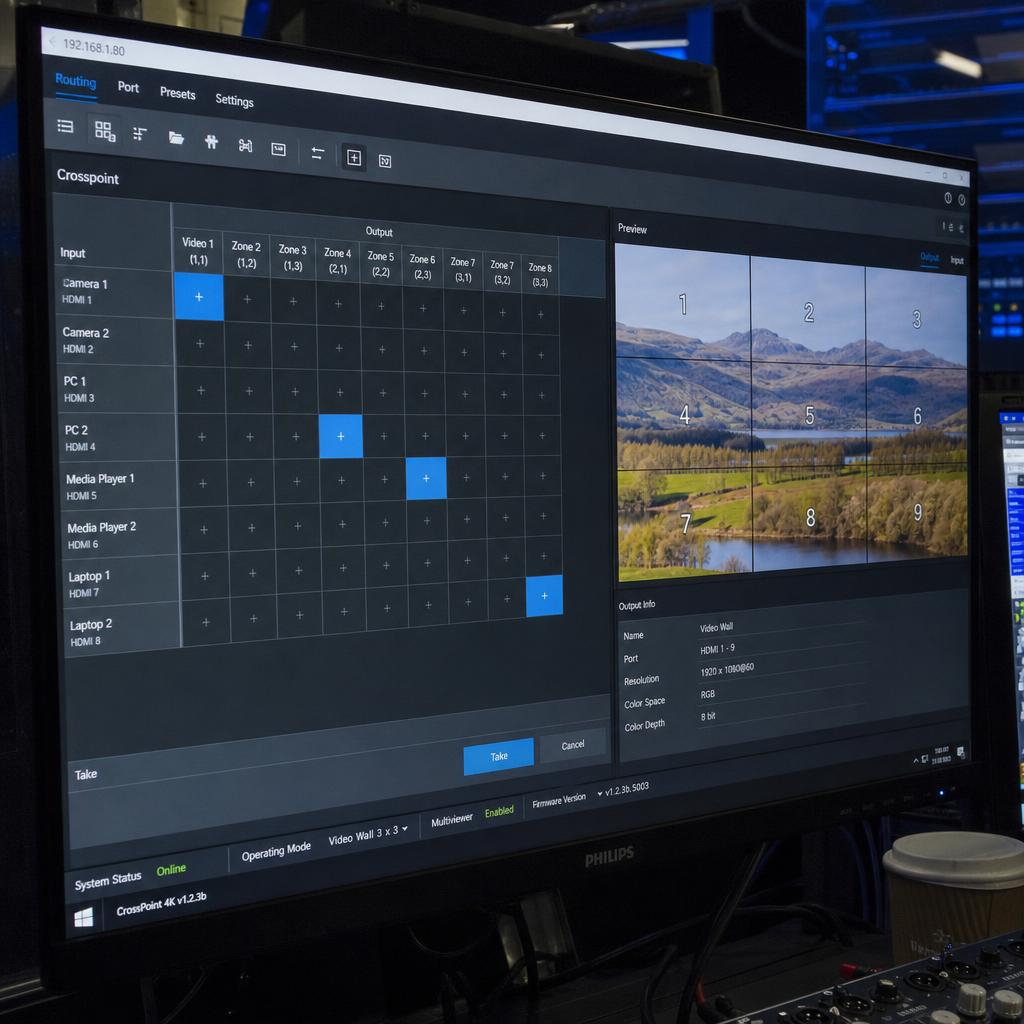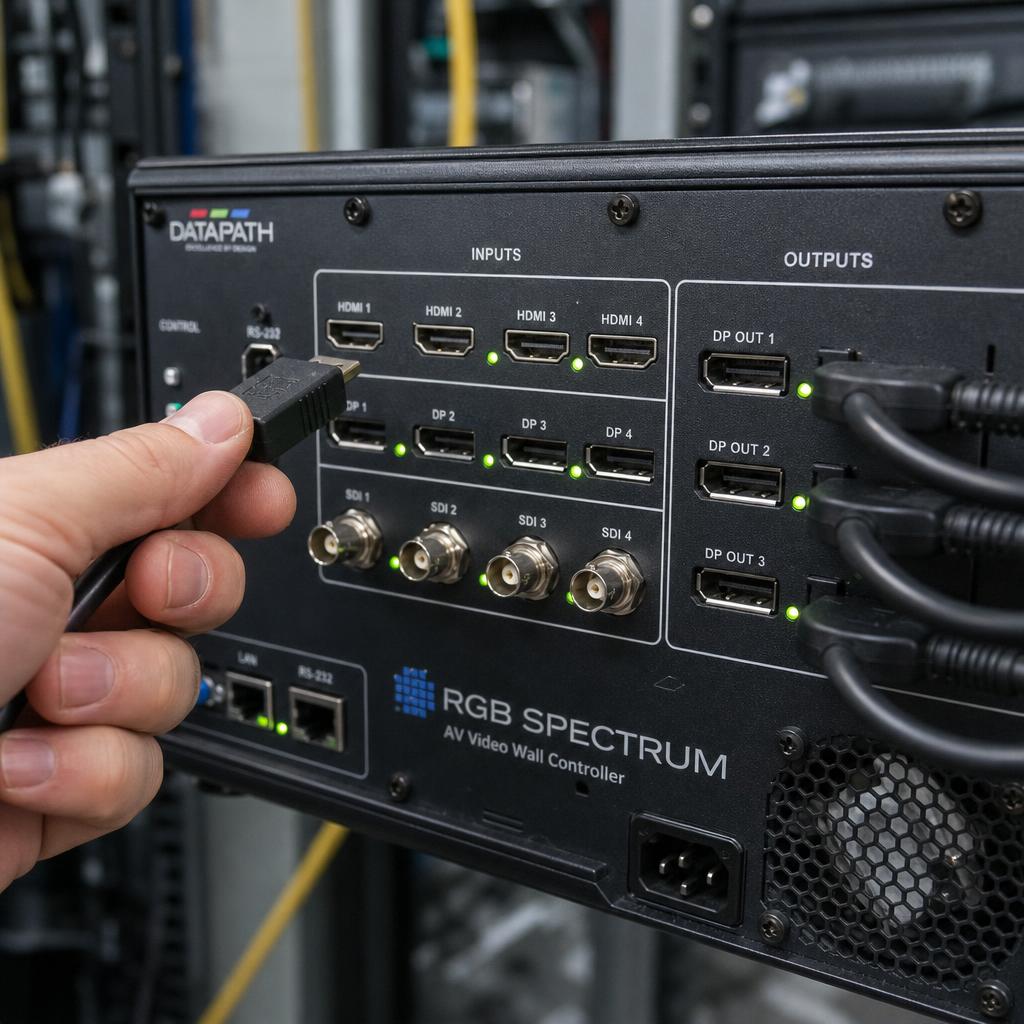
A environment controller is the specialized hardware or software that manages content distribution across multiple displays configured as a video wall. It's the essential bridge between content sources and the visual output.
Core Functions
Input Processing
- Accept video signals (HDMI, DisplayPort, SDI, network streams)
- Decode compressed streams (H.264, H.265)
- Handle multiple simultaneous sources
Scaling & Transformation
- Scale content to match total video wall resolution
- Rotate content (portrait displays in landscape wall)
- Maintain aspect ratio or stretch to fill
- Apply image adjustments (brightness, contrast, color)
Distribution
- Split processed image into portions for each display
- Route correct image section to each output
- Apply bezel compensation (accounting for screen gaps)
Switching
- Change between input sources
- Picture-in-picture (multiple sources visible)
- Matrix switching (any input to any display zone)
Types of Controllers
Dedicated Hardware Controllers
- Purpose-built boxes from manufacturers like Datapath, RGB Spectrum, Christie
- Highest reliability and video quality
- Real-time processing with minimal latency
- Variable cost depending on configuration and scale
PC-Based Controllers
- Standard computer with specialized video cards
- Software processes and distributes content
- More flexible but requires configuration
- Moderate cost, flexible configuration
Distributed Software Solutions
- Multiple media players coordinated by software
- Each player renders its portion of the wall
- Network-based synchronisation
- Lower per-display cost with software licensing
LED Video Processors
- Specialized for LED wall applications
- Handle LED panel data protocols
- Often include scaling and switching
- Integrate with receiving cards in LED panels
Choosing a Controller
Factors to consider: - Number of displays: Total outputs needed - Resolution requirements: 4K per display vs 1080p - Source types: What inputs must it accept? - Real-time needs: Live video vs scheduled content? - Budget: Hardware controllers cost more but simplify operation
SPARC supports both integrated hardware controllers and distributed software synchronisation, enabling deployments that match the specific requirements and budget of each installation.