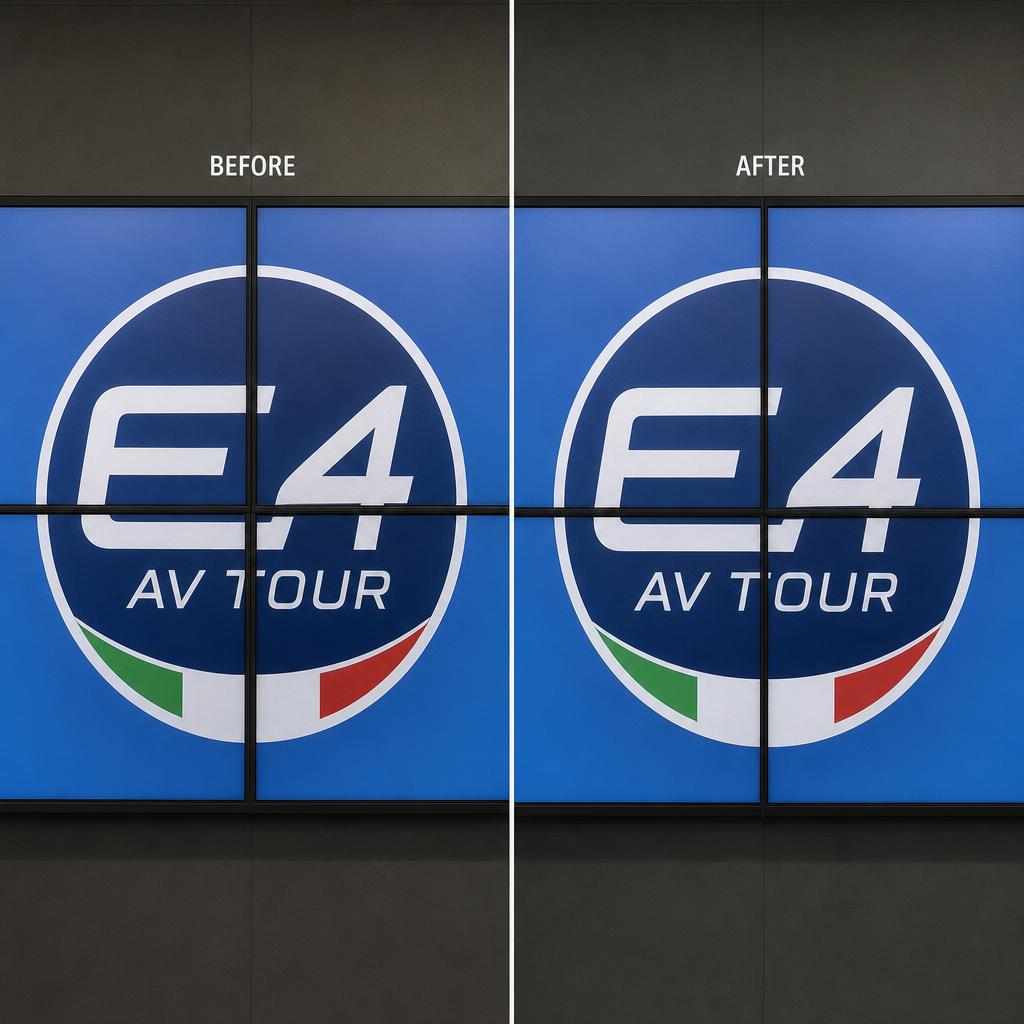
Bezel compensation is a critical video wall technology that addresses the visual discontinuity caused by physical bezels between adjacent displays. Without compensation, content spanning multiple environments appears distorted where it crosses bezel boundaries.
The Bezel Problem
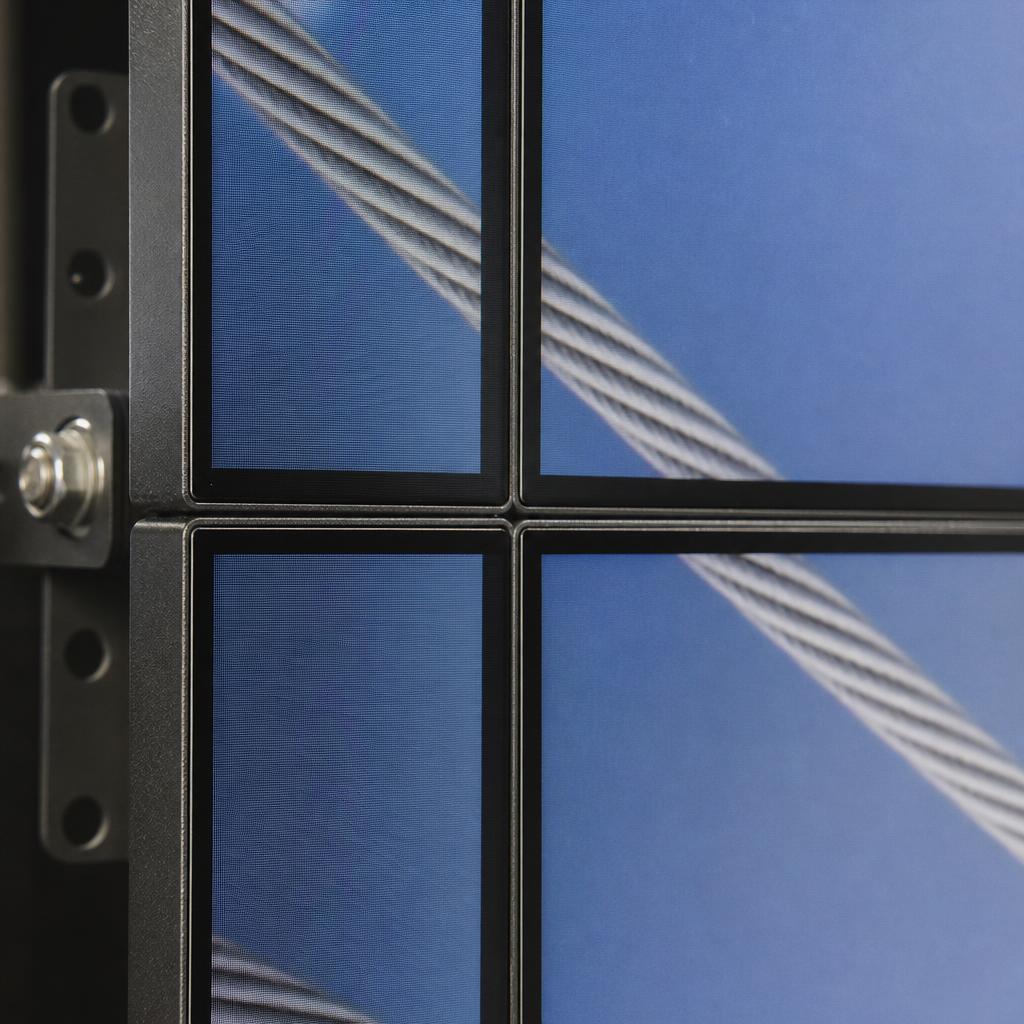
LCD and LED-backlit displays have physical borders (bezels) around their active image area. In a video wall, these bezels create gaps between screens. When content spans multiple displays: - Objects appear stretched at bezel boundaries - Lines don't connect properly across screens - The visual flow is broken by the black gaps
How Bezel Compensation Works
Bezel compensation calculates the exact width of bezels and removes corresponding pixels from the rendered image:
- Measure bezels: Determine precise width of bezels (typically 1-5mm for narrow bezel displays)
- Calculate pixel offset: Convert bezel width to pixel count at the wall's resolution
- Remove pixels: The environment controller or software removes a strip of pixels equal to the bezel width from each display edge
- Render adjusted content: Each display shows content as if the bezels were transparent, creating apparent continuity
The Illusion
With bezel compensation, content appears to continue "behind" the bezels rather than stretching across them. A straight line crossing multiple environments remains straight (though with gaps). Moving objects travel at consistent speed without acceleration at boundaries.
Configuration Considerations
Measurement accuracy: Bezels must be measured precisely. Even 0.5mm errors accumulate across large walls.
Consistent bezels: Mixed display models with different bezel widths require per-display configuration.
Content type: Compensation works best for video and natural imagery. Text and UI elements at bezel boundaries may be problematic.
Scaling impact: When content is scaled to fit the wall, bezel compensation must account for the effective pixel size.
Beyond LCD: LED and Direct View
LED walls and direct-view displays eliminate bezels entirely, creating truly seamless surfaces. For installations where bezel gaps are unacceptable, LED technology (despite higher cost) provides the only perfect solution. SPARC supports both bezel-compensated LCD walls and seamless LED installations.