LED and LCD are the two dominant technologies for large-format video walls, and choosing between them involves real tradeoffs in image quality, cost, and installation requirements.
How Each Technology Works
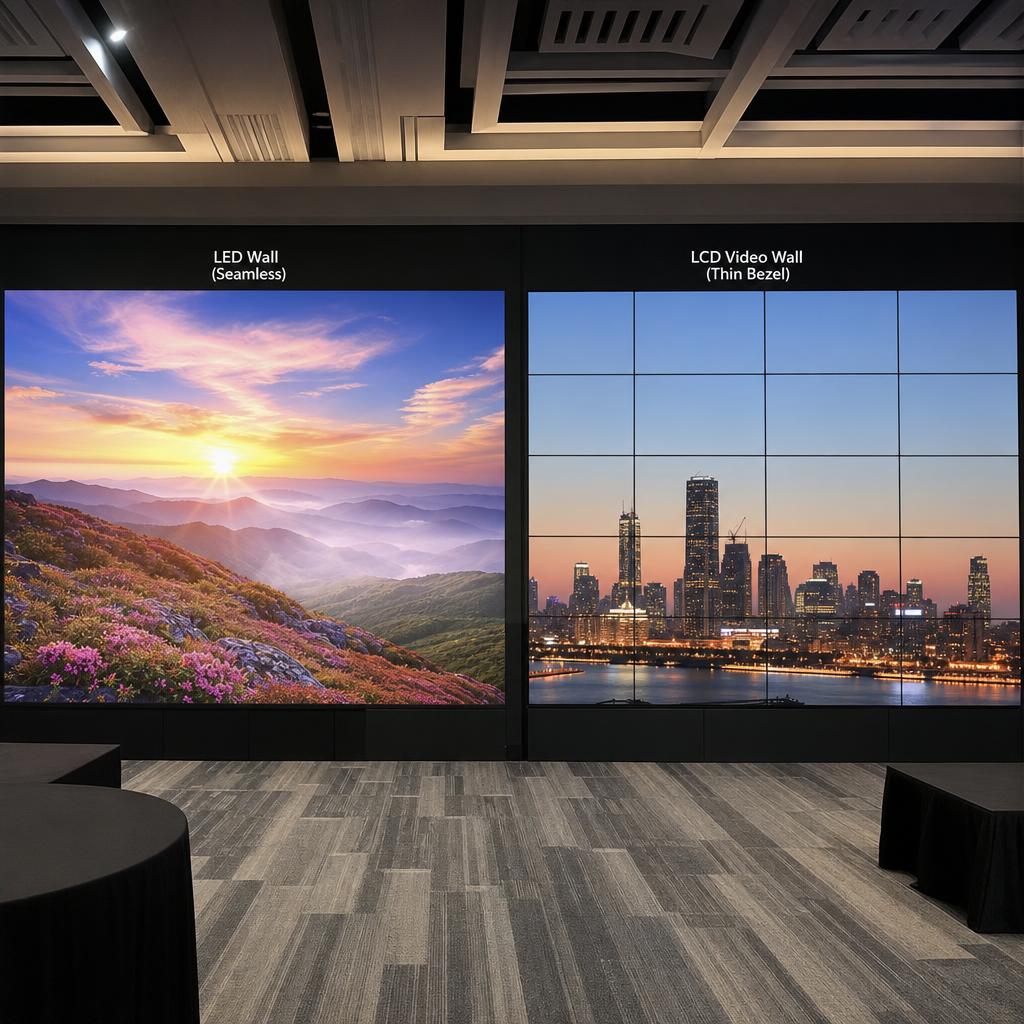
LED Video Walls Built from modular LED panels or cabinets, each containing many small LED clusters. Panels tile together edge-to-edge with no visible border, and the resulting wall is a genuinely continuous surface — there's no display edge to compensate for, because there's no traditional "screen" boundary at all.
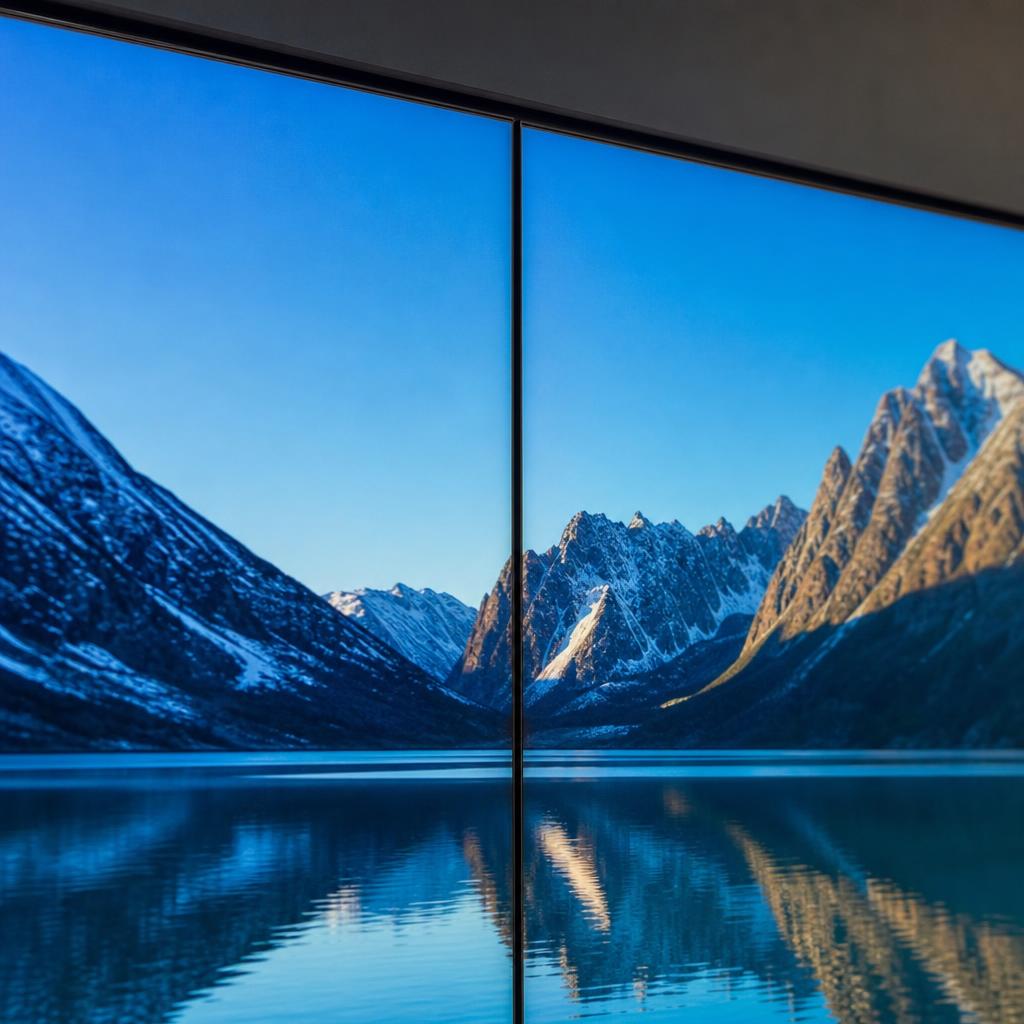
LCD Video Walls Built from standard flat-panel LCD displays (the same underlying technology as a television or monitor), each with a physical bezel around its active image area. Multiple panels are arranged in a grid to form a larger combined image, and bezel compensation techniques are used to minimize the visual impact of the gaps between panels.
Key Differences
| Factor | LED | LCD |
|---|---|---|
| Seams | None — fully seamless | Visible bezels between panels |
| Brightness | Very high, suited to bright or outdoor spaces | Lower maximum brightness |
| Resolution flexibility | Determined by pixel pitch; scalable to any size | Fixed panel resolution; wall resolution is panel resolution × grid |
| Viewing distance | Can be optimized for any distance via pixel pitch | Best suited to closer viewing given native resolution |
| Cost | Higher, especially at fine pixel pitch | Generally lower per square foot |
| Maintenance | Modular — individual panels or modules can be swapped | Individual panel replacement is straightforward but panels are larger units |
| Outdoor suitability | Excellent, weatherproof options widely available | Limited; bright ambient light and glare are challenging |
When LED Makes Sense
- Large-scale, high-visibility installations where seamlessness matters (stadiums, retail flagships, broadcast)
- Outdoor or high-ambient-light environments needing very high brightness
- Custom shapes, curves, or unconventional aspect ratios
- Installations where viewing distance justifies the pixel pitch cost tradeoff
When LCD Makes Sense
- Budget-conscious projects where visible bezels are an acceptable tradeoff
- Indoor environments with controlled lighting
- Situations needing very high native resolution at close viewing distance without the cost of fine-pitch LED
- Smaller-scale video walls (a handful of panels) where LED's modularity offers less benefit
A Note on Pixel Pitch
LED walls use pixel pitch to describe resolution, since the pixel grid isn't fixed by a manufactured panel resolution the way LCD is. Choosing the right pixel pitch for your viewing distance is one of the most important decisions in an LED wall project.
SPARC's Support for Both
SPARC's content management and control tools work across both technologies, so the choice between LED and LCD can be based on the venue and budget rather than software compatibility. Content is designed once and adapted to either a bezel-compensated LCD grid or a seamless LED canvas.