Why Does Brisbane Need a Precinct-by-Precinct Approach?
Because the city's hospitality trade is spread across distinct precincts, each with its own rhythm.
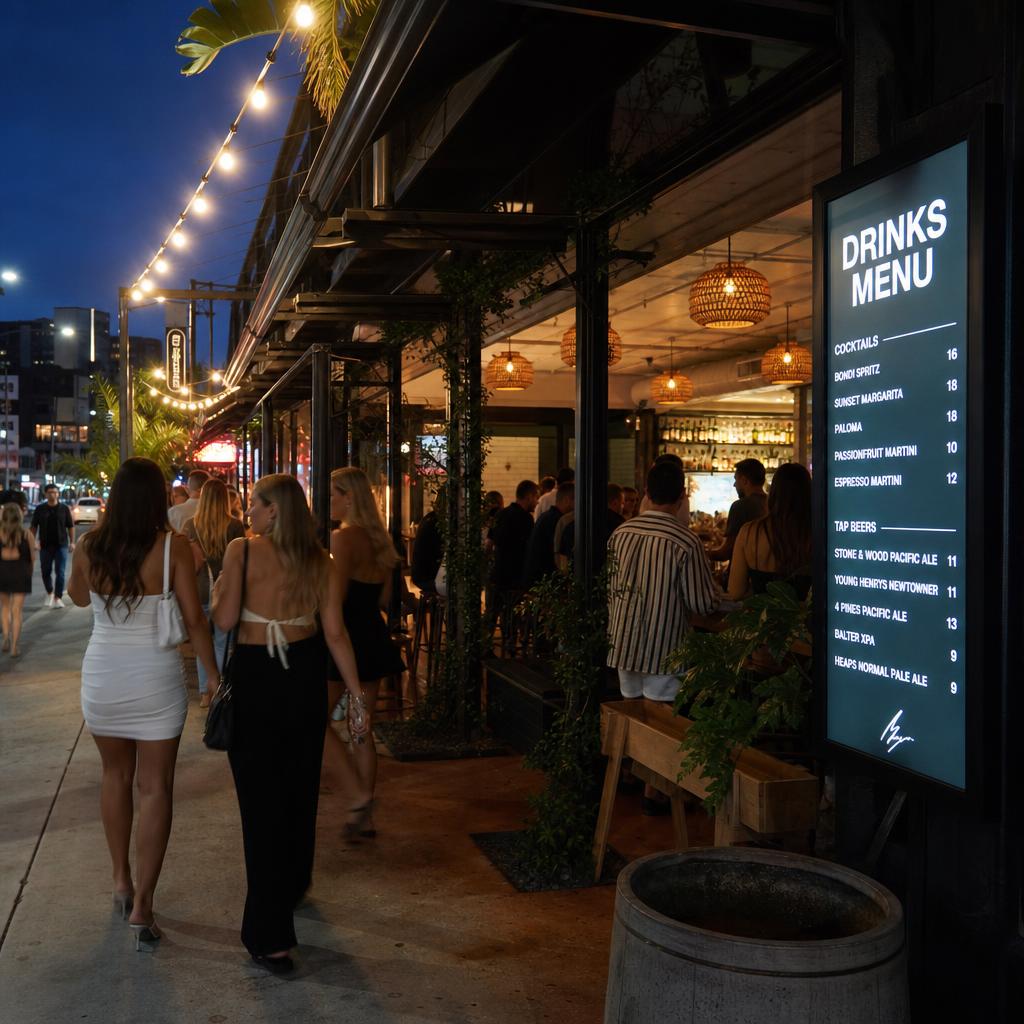
- Fortitude Valley and James Street — heavy evening and weekend trade. Bars, restaurants and late-night QSR needing content built for after-dark visibility and a different customer mood than a lunchtime crowd.
- South Bank and the CBD riverside — steady all-day tourist and office-worker traffic, with tourism spiking through Brisbane's dry, mild winter. The city's peak visitor season runs opposite to the southern states.
- West End and inner-suburban strips — cafe and casual-dining culture, younger and more price-aware.
A single content strategy applied uniformly under-serves at least two of them. An evening-trade bar and a daytime cafe have almost nothing in common in when and what they should display, even running the same platform and the same head-office brand guidelines.
What Do Brisbane Drive-Thru Menu Boards Need?
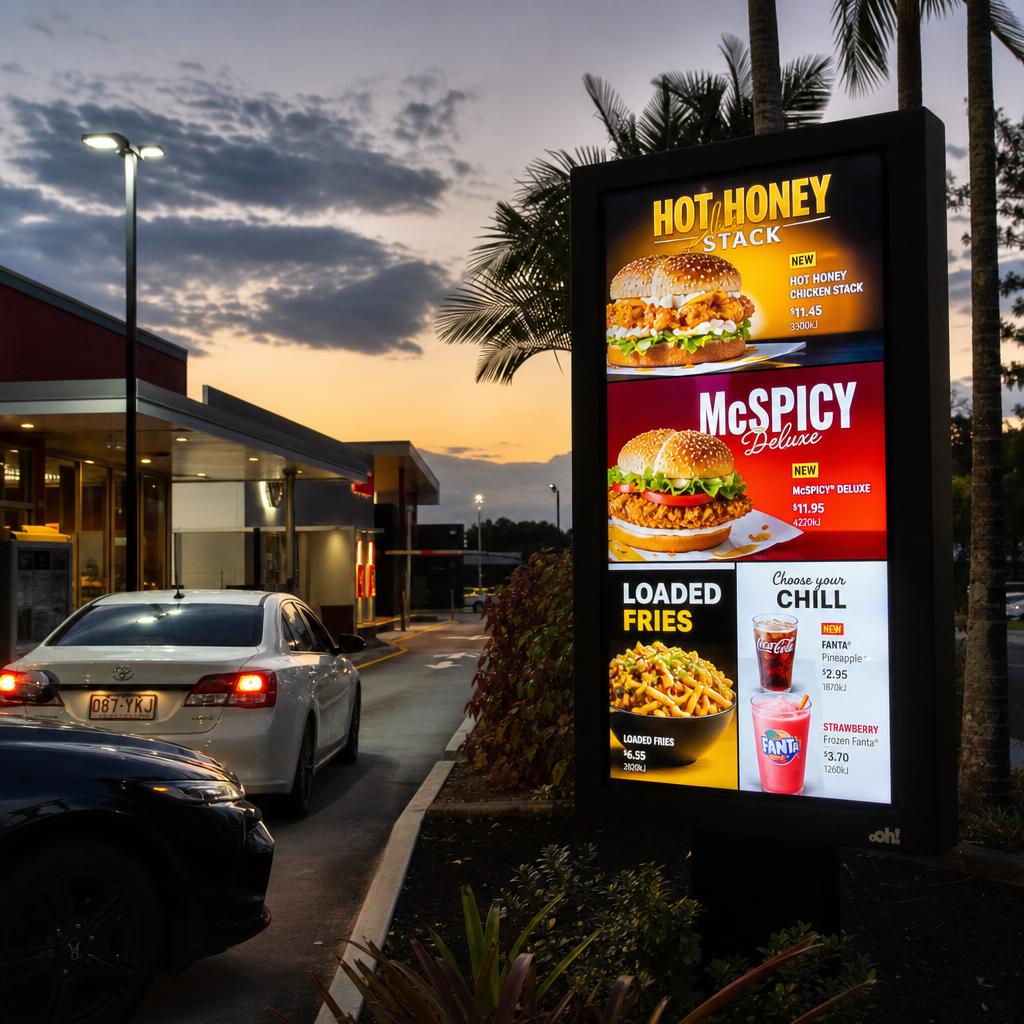
Brisbane and South East Queensland have some of the highest drive-thru QSR density in the country, spread across suburban arterial roads rather than concentrated in one CBD the way Sydney and Melbourne retail is.
That creates a specific requirement: menu boards and drive-thru order screens have to stay perfectly synced between the outdoor order point and the indoor kitchen and till systems.
Pricing and item availability must update instantly and identically across both. A mismatch between what a customer orders at the speaker and what is charged at the window is a customer-experience and compliance problem, not a cosmetic one.
Because Queensland operators typically run many suburban sites rather than a handful of CBD flagships, centralised POS-synced menu board management matters more here than in a smaller network. A price change needs to reach every drive-thru simultaneously, not roll out site by site over a week.
How Does Brisbane's Climate Affect Signage Hardware?
Subtropical conditions bring hardware considerations the southern capitals do not have.
Summer humidity and heat push the same requirements as Perth's dry heat in a different form: high-brightness, ambient-light-adjusting outdoor displays that stay legible and do not overheat through the hot, humid months.
Storm season — typically November to April — adds a risk most other Australian cities do not plan around. Sudden severe thunderstorms and occasional cyclone-adjacent systems bring high winds and heavy rain to South East Queensland.
Outdoor and forecourt signage, particularly at drive-thru order points and exterior building signage, needs:
- Weatherproof, IP-rated enclosures
- Secure mounting rated for wind loading
- Remote monitoring, so a storm-related fault can be identified and triaged without waiting for someone to check the site next morning
When Does Brisbane's Trade Actually Shift?
Two patterns worth planning content around.
Winter tourism peak, June to August. Visitors escaping colder southern states lift trade across South Bank, the CBD, and nearby Gold Coast and Sunshine Coast day-trip destinations. The content shift is toward visitor-facing messaging and away from locals-only, then back again the rest of the year.
One-off event trade. Venues near major event precincts need signage that flexes quickly around a concert or a major sporting fixture — where a temporary content override matters more than a permanent template change.
A Short Checklist Before You Sign a Brisbane Signage Contract
- Does the platform support different schedules for evening-trade precincts (Fortitude Valley, James Street) versus daytime café and tourist precincts (South Bank, CBD)?
- Are drive-thru menu boards genuinely POS-synced end to end, so outdoor order-point pricing always matches the till?
- Is outdoor and drive-thru hardware rated for Queensland's humidity, heat, and storm-season wind and rain — not a generic outdoor spec chosen for a drier climate?
- Can a fault be identified remotely after a storm event, without needing an in-person site visit to confirm what's wrong?
- Can content be temporarily overridden for seasonal tourism shifts or nearby major events without rebuilding the underlying schedule?
Getting these right avoids the two most common Brisbane-specific failure points: drive-thru boards that fall out of sync with the till during high-volume periods, and outdoor hardware that doesn't survive its first storm season.
SPARC answers yes to every item on that checklist, including separate schedules per precinct. Book a demo and we will run it against your actual venues — evening trade in the Valley and daytime trade at South Bank behaving differently on the same account.
Case Studies
Hospitality
Challenge
A Brisbane QSR franchise group running drive-thru sites across the metro area found menu pricing occasionally fell out of sync between outdoor order-point screens and till systems during promotions, and lost a display for two days after a storm knocked a site's outdoor screen offline without anyone noticing.
Solution
Moved to POS-synced digital menu boards so pricing changes push identically to every order point and till simultaneously, and enabled remote device monitoring so an offline screen triggers an alert instead of going unnoticed.
Result
Promotional pricing now updates in real time across all drive-thru sites with zero mismatch incidents, and outages are identified and resolved within hours of a storm event rather than being discovered days later on a routine site visit.
Brisbane digital signage FAQs
Does Brisbane's storm season affect outdoor digital signage hardware choices?
Yes. South East Queensland's storm season (roughly November to April) brings high winds and heavy rain, so outdoor and drive-thru signage needs weatherproof, IP-rated enclosures, wind-rated mounting, and remote monitoring so faults can be identified without an immediate site visit.
Should hospitality venues in different Brisbane precincts run the same signage content?
Not usually. Evening-trade precincts like Fortitude Valley and James Street have a different customer rhythm to daytime tourist and office precincts like South Bank and the CBD, so dayparted, precinct-specific scheduling generally outperforms one uniform playlist.
Does Brisbane's winter tourism season change signage content strategy?
It's worth planning for. Brisbane sees a winter visitor influx from colder states, so hospitality venues near tourist precincts often shift toward more visitor-facing content through that period before returning to locals-focused messaging the rest of the year.
Is SPARC's digital signage platform available for Brisbane hospitality and QSR businesses?
Yes. SPARC operates Australia-wide from a Melbourne headquarters, with data hosted on AWS Sydney (ap-southeast-2) and support in Australian time zones. See the [Digital Signage Brisbane](/digital-signage-brisbane) page for the full local overview.
Ready to Experience SPARC?
Join forward-thinking organizations already using SPARC for their digital signage needs.