Custom outdoor signs are often the first interaction customers have with your business. A well-designed, quality-built outdoor sign attracts attention, communicates your brand, and withstands years of Australian weather. A poorly chosen sign fades, cracks, and sends the wrong message about your business quality.
This guide covers everything you need to know about custom outdoor signage—from material selection to installation to maintenance.
Types of Custom Outdoor Signs
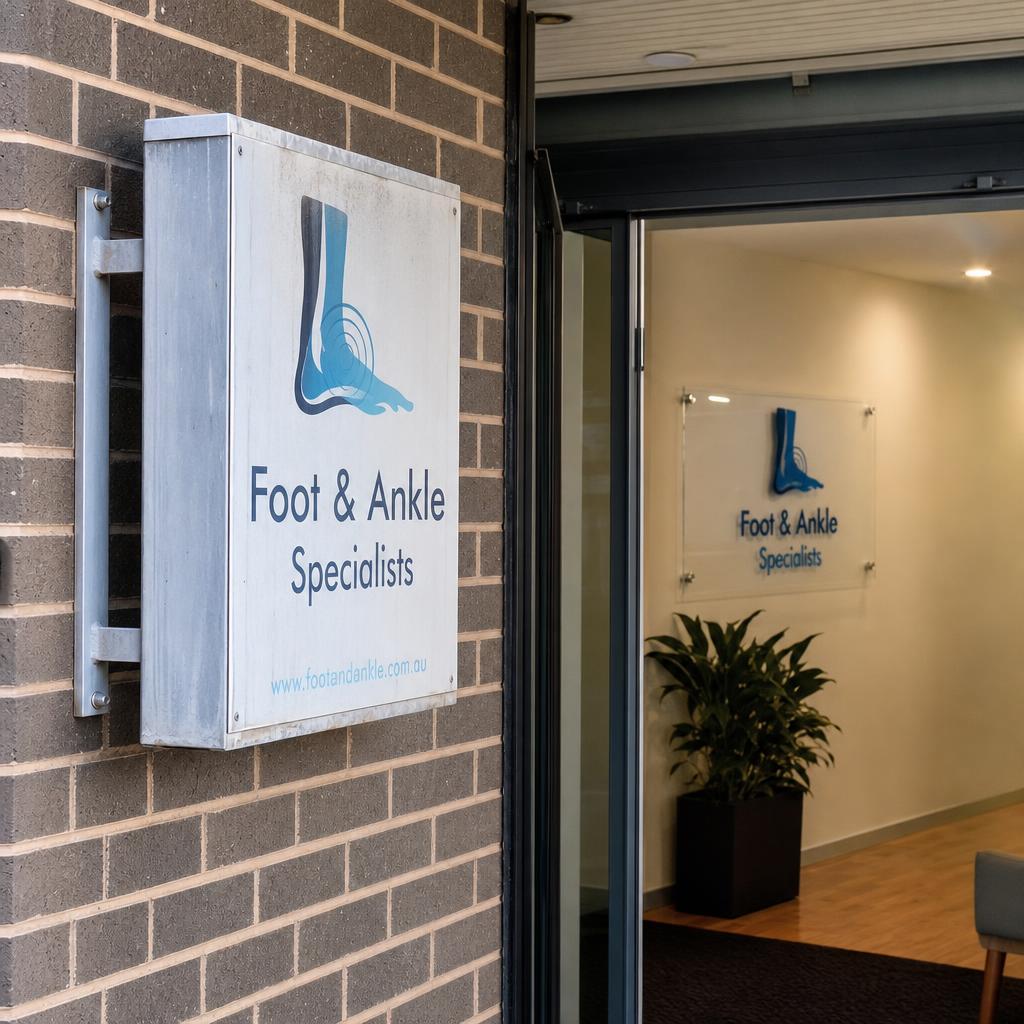
Fascia Signs (Shopfront Signs)
The sign mounted above your entrance, identifying your business to foot and vehicle traffic.
Options:
- Flat panel with vinyl or printed graphics
- Raised lettering (acrylic, metal, or foam)
- Illuminated lightbox
- LED illuminated channel letters
- Fabricated metal with painted finish
Typical sizes: 2-6 metres wide × 0.5-1.5 metres high
Price range: $1,500-$25,000+ depending on size, materials, and illumination
Pylon Signs (Pole Signs)
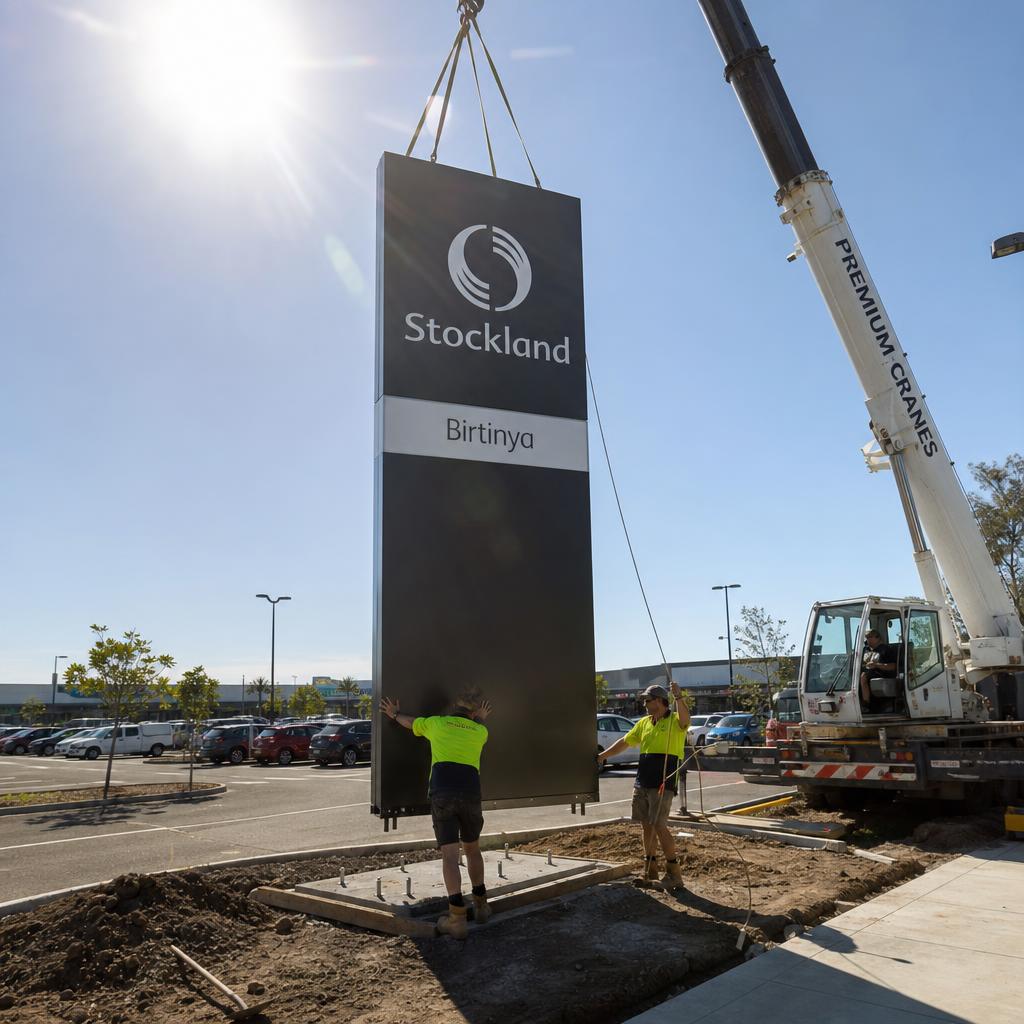
Freestanding signs on poles, visible from roadways. Common for businesses set back from the road or in commercial/industrial areas.
Options:
- Single or double-sided
- Illuminated or non-illuminated
- Single tenant or multi-tenant directory
- Digital/LED message centres
Typical sizes: 2-8 metres high
Price range: $5,000-$50,000+
Monument Signs
Low-profile freestanding signs at ground level, often incorporating landscaping or architectural materials.
Options:
- Masonry or stone base with sign panel
- Aluminium composite construction
- Illuminated cabinet signs
- Dimensional lettering on structure
Typical sizes: 1-2 metres high × 1.5-3 metres wide
Price range: $4,000-$30,000+
A-Frame/Sandwich Boards
Portable pavement signs for daily messaging and foot traffic capture.
Options:
- Timber with chalkboard surface
- Metal with changeable panels
- Plastic with snap-frame graphics
- Digital A-frames with LCD screens
Typical sizes: 0.6-1.2 metres high
Price range: $150-$3,500 (digital)
Blade Signs (Projecting Signs)
Signs that project perpendicular from the building, visible to pedestrians along the footpath.
Options:
- Hanging blade with bracket
- Double-sided illuminated
- Decorative wrought iron style
- Modern LED backlit
Typical sizes: 0.3-1 metre projection
Price range: $800-$8,000
Outdoor Sign Materials Compared
Aluminium Composite Panel (ACP)
The most common material for modern business signage. Aluminium skins bonded to a plastic or mineral core.
Pros:
- Lightweight yet rigid
- Excellent weather resistance
- Easy to fabricate and install
- Good value for money
- Accepts vinyl, print, and paint finishes
Cons:
- Can dent if impacted
- Standard versions not fire-rated (check building requirements)
- Edges can delaminate if not properly finished
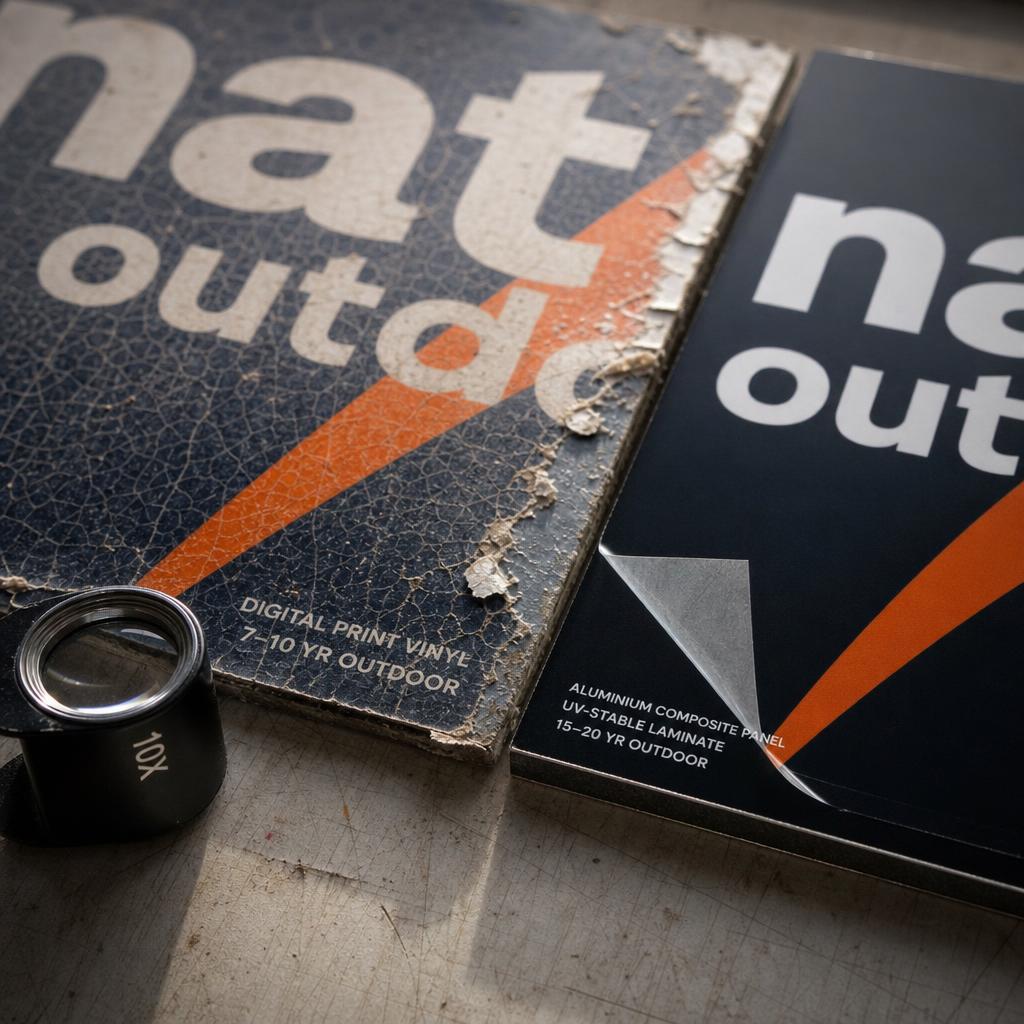
Lifespan: 10-15+ years with quality graphics
Best for: Fascia signs, monument signs, general commercial signage
Acrylic (Perspex/Plexiglass)
Transparent or coloured plastic sheeting, often used for raised lettering and illuminated signs.
Pros:
- Excellent for illumination (transmits light evenly)
- Available in many colours and finishes
- Weather resistant
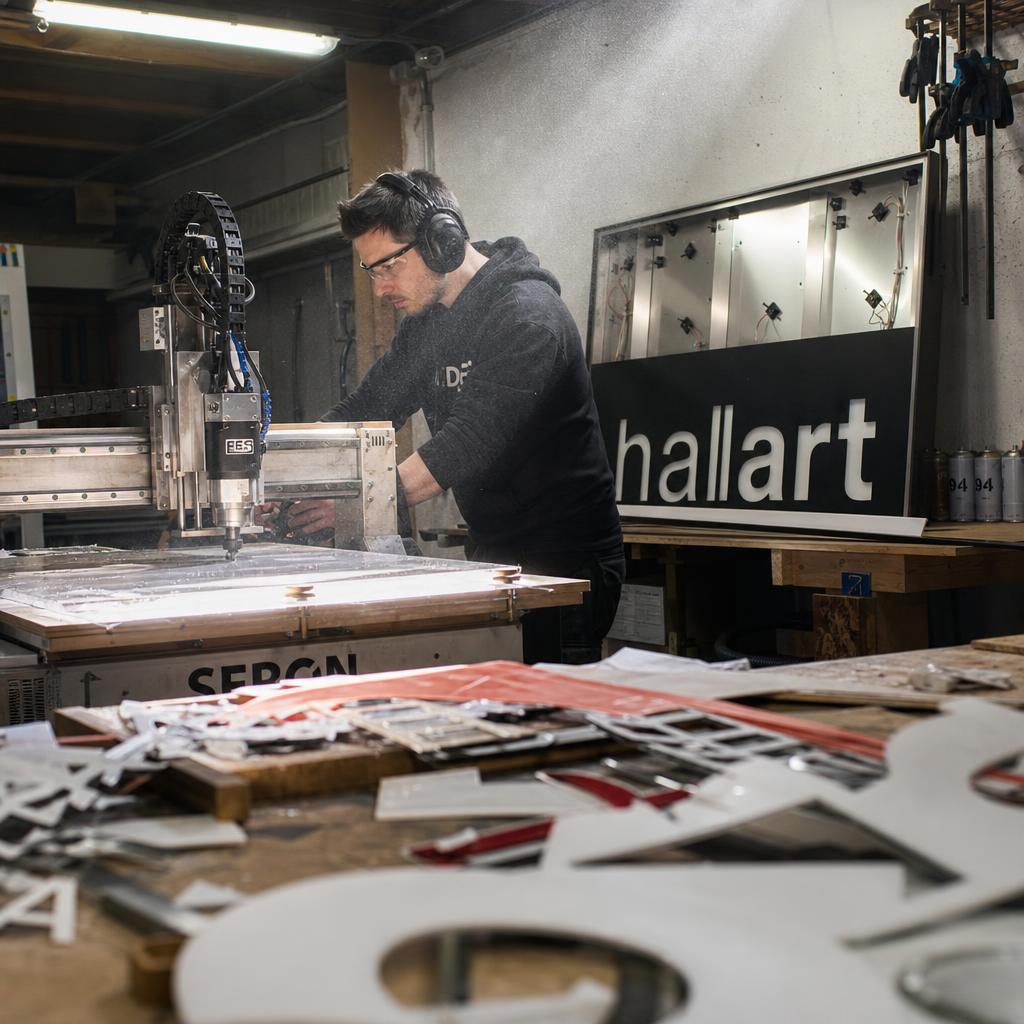
- Can be CNC-routed into precise shapes
Cons:
- Scratches more easily than glass
- Can yellow with extended UV exposure (use UV-stable grades)
- Brittle—can crack if impacted
Lifespan: 8-12 years outdoor (UV-stable grades)
Best for: Illuminated lettering, light boxes, decorative elements
Stainless Steel
Premium material for high-end architectural signage.
Pros:
- Extremely durable
- Prestigious appearance
- Corrosion resistant (316 grade for coastal)
- Recyclable
Cons:
- Expensive
- Heavy—requires robust mounting
- Fingerprints visible on polished finishes
- Requires skilled fabrication
Lifespan: 20+ years
Best for: Corporate signage, high-end retail, coastal locations
Aluminium (Solid)
Extruded or flat aluminium sheet, powder-coated or anodised.
Pros:
- Lighter than steel
- Corrosion resistant
- Can be powder-coated any colour
- Excellent for precision CNC cutting
Cons:
- More expensive than ACP
- Can oxidise if not properly finished
- Dents if impacted
Lifespan: 15-20+ years with quality finish
Best for: Cut lettering, architectural signage, premium fascias
HDU (High-Density Urethane)
Foam-based material that can be carved, moulded, and painted.
Pros:
- Lightweight
- Can achieve complex 3D shapes
- Won't rot, crack, or split
- Takes paint well
Cons:
- Softer than metal options
- Requires painting (maintenance)
- Less premium appearance close-up
Lifespan: 10-15 years with maintenance
Best for: Decorative carved signs, 3D elements, heritage-style signage
Vinyl Graphics
Adhesive films applied to substrates or directly to surfaces.
Pros:
- Cost-effective
- Wide range of colours and effects
- Easy to update/replace
- Suitable for complex graphics and photos
Cons:
- Fades over time (quality varies)
- Can peel or lift at edges
- Not dimensional
Lifespan: 3-7 years outdoor (cast vinyl longer than calendered)
Best for: Applied graphics, window signage, vehicle wraps
What Material for Outdoor Signs: Australian Conditions
Australian conditions are harsh on signage. UV exposure, heat cycling, and coastal salt require careful material selection.
Coastal Locations (Within 1km of Salt Water)
Recommended:
- 316 stainless steel
- Marine-grade aluminium
- Acrylic with stainless hardware
- UV-stable vinyl (3M 780mC or equivalent)
Avoid:
- Mild steel (rusts rapidly)
- Standard galvanised (fails at welds)
- Cheap vinyl (fades in 12-18 months)
- Iron decorative elements
Tropical/High UV Areas
Recommended:
- UV-stable materials throughout
- Light colours (darker colours heat more, accelerate degradation)
- Anodised or powder-coated metals
- Premium UV-resistant vinyl
Considerations:
- Expansion/contraction from heat cycling
- Cyclone ratings if applicable
- Mould resistance for illuminated signs
Inland/Arid Regions
Recommended:
- Aluminium (handles heat cycling well)
- UV-stable materials
- Dust-sealed illuminated signs
- Heat-resistant LED components
Considerations:
- Extreme temperature range
- Dust accumulation on horizontal surfaces
- Insect ingress to illuminated signs
Custom Sign Design Best Practices
Visibility Principles
Reading distance: Calculate based on traffic speed and sign placement - Pedestrian (walking speed): 2.5cm letter height per 10m distance - Vehicle (60km/h): 2.5cm letter height per 1m distance
Contrast: Maximum contrast between text and background - Best: White text on dark background, or dark text on light background - Worst: Similar tones, complementary colours
Simplicity: Fewer elements = faster comprehension - Maximum 3-5 words for quick-read situations - Logo + business name is often sufficient
Brand Consistency
Your outdoor sign should align with: - Brand colour palette (use PMS colour matching) - Typography (or appropriate substitute for fabrication) - Logo specifications (don't distort or modify) - Brand personality (premium brand = premium materials)
Illumination Options
Front-lit: Light shines onto the sign face - Good for channel letters and cabinet signs - Visible from long distances - Higher energy consumption
Back-lit (halo): Light shines behind letters creating halo effect - Premium, modern appearance - Subtle and sophisticated - Best on buildings with dark backgrounds
Edge-lit: Light transmitted through acrylic edges - Sleek, contemporary look - Lower energy consumption - Best for smaller signs
Non-illuminated: Relies on ambient light or spotlighting - Lower cost - No electrical requirements - Limited evening visibility
Installation and Permits
Council Requirements
Most Australian councils require approval for: - Illuminated signs - Signs above certain sizes (typically 2.5m²) - Signs projecting over footpaths - Freestanding signs - Signs in heritage areas
Typical process:
- Submit application with drawings and specifications
- Pay application fee ($200-$1,500)
- Wait for assessment (2-8 weeks)
- Receive permit with conditions
- Install per approved plans
- Potentially inspection post-installation
Installation Requirements
Structural:
- Signs must be engineered for wind loads (AS/NZS 1170.2)
- Mounting must be appropriate for building structure
- Freestanding signs need footings designed by engineer
Electrical:
- All electrical work by licensed electrician
- Compliance certificate required
- IP rating appropriate for location (IP65+ for outdoor)
Safety:
- Working at heights regulations
- Traffic management if affecting road/footpath
- Installer insurance and licensing
Maintenance and Care
Regular Maintenance
Monthly:
- Visual inspection for damage
- Clean accessible surfaces
- Check illumination functioning
Quarterly:
- Detailed cleaning including high areas
- Check electrical connections
- Inspect mounting and fixings
- Touch up any paint chips
Annually:
- Professional inspection
- Electrical safety check
- Assess vinyl condition (fading, peeling)
- Plan refurbishment if needed
Common Issues and Solutions
Fading graphics: Replace vinyl (budget 5-7 year lifespan outdoors)
Failed LEDs: Individual LED replacement or module swap
Corrosion: Treat with appropriate primers and coatings; may require refabrication for severe cases
Physical damage: Assessment for repair vs replacement depending on severity
Digital Outdoor Signage Alternative
For businesses wanting outdoor visibility without the commitment of permanent signage, outdoor digital displays offer flexibility.
Advantages:
- Change messaging instantly
- Test different content to see what works
- Daypart different messages
- React to weather, events, or inventory
Considerations:
- Higher upfront investment
- Requires IP65+ rated outdoor displays
- Power and potentially network connection needed
- Content strategy is essential
---
Want the flexibility of digital without the complexity? SPARC makes outdoor digital signage simple—even in harsh Australian conditions. Explore SPARC pricing to learn more.
How Australian Climate Affects Your Sign's Lifespan
The same sign material performs differently depending on where in Australia it's installed. If you're briefing a sign maker, telling them your postcode matters as much as telling them your budget.
Coastal and near-coastal sites face salt-laden air that accelerates corrosion in untreated metal fixings and cabinet frames. Aluminium composite panels handle this well because the aluminium skins are naturally corrosion-resistant, but the internal fixings, brackets and any exposed steel components need to be marine-grade stainless or hot-dip galvanised — standard fixings will rust within a few years in a beachside strip.
Northern and tropical regions (Queensland, the Top End, northern WA) deal with the highest UV loads in the country alongside cyclonic wind ratings in many council zones. UV is what fades colour and embrittles plastics over time, so digitally printed vinyl needs a UV-laminate overlay, and acrylic or polycarbonate faces should be rated for outdoor UV exposure rather than standard-grade sheet. Wind loading is a structural engineering question, not a materials one — pylon and monument signs in cyclone-prone council areas often need engineer-certified footings, which adds to both cost and lead time.
Inland and arid areas bring extreme heat cycling and dust rather than salt or cyclone wind. Large temperature swings between day and night cause materials to expand and contract, which over years can stress rigid panel joins and lettering adhesives. Signage here benefits from expansion allowances in the fabrication and adhesives rated for high-temperature service.
Southern temperate zones (Melbourne, southern Victoria, Tasmania) have milder UV and less salt exposure but more rain and humidity cycling, which is more forgiving on materials but harder on paint finishes that aren't properly primed. If in doubt, ask your sign maker what grade of material and fixings they'd specify for your specific suburb, not just "outdoor use."
Maintenance That Protects Your Investment
A quality sign is a multi-year asset, and most of what shortens its life is neglect rather than manufacturing defects.
Every few months: rinse acrylic and aluminium composite faces with water and a mild detergent. Avoid ammonia-based glass cleaners on acrylic — they cause micro-cracking (crazing) over time.
Every year, before storm season: check illuminated signs' seals and connections. A compromised seal lets moisture into the light box, which shorts LEDs and causes visible water staining well before the sign is due for replacement.
For vinyl-wrapped or printed signage, watch the edges first — lifting corners let moisture underneath and cause peeling to spread. A quick call to your installer for a re-edge or partial reprint is far cheaper than a full replacement. Trim any encroaching vegetation and keep sprinklers from hitting the sign face directly, since mineral deposits from hard water etch into laminates over time.
Custom outdoor signs FAQs
How long does a custom outdoor sign typically last?
It depends heavily on material, exposure and maintenance, but a well-specified sign made from quality aluminium composite or properly UV-laminated vinyl and kept clean generally performs well for many years before fading or wear become noticeable. Cheaper unlaminated prints or budget acrylic in high-UV locations will show their age much sooner.
Do I need council approval for a new sign?
Most local councils require a permit for new signage, particularly for pylon signs, illuminated signs, and anything projecting over a footpath or affecting sightlines near a road. Requirements vary significantly between councils, so it's worth checking with your local council or asking your sign maker to handle the permit application as part of the job.
How long does it take to get a custom sign made and installed?
Simple signage like a printed shopfront panel can often be turned around in one to two weeks. More complex jobs — illuminated pylon signs, monument signs requiring engineering certification, or anything needing council approval — can take several weeks to a few months once permit timelines are factored in. Ask for a realistic timeline upfront so it doesn't clash with a launch date or lease changeover.
Can I get my old sign repaired instead of replacing it entirely?
Often, yes. Faded vinyl can be reprinted and reapplied to an existing cabinet, damaged LED modules can be replaced without rebuilding the whole light box, and dented aluminium panels can sometimes be swapped individually rather than remaking the full sign. It's worth getting a repair quote before assuming a full replacement is necessary, particularly if the underlying structure is still sound.
What's the difference between illuminated and non-illuminated signage in terms of ongoing cost?
Illuminated signs cost more upfront and carry a small ongoing electricity cost, plus occasional maintenance for LEDs, transformers and seals. Non-illuminated signs have no running cost and fewer failure points, but lose visibility after dark. For businesses that trade into the evening or rely on passing traffic at night, the extra running cost is usually justified by the visibility gain.
Can one sign maker handle design, fabrication, permits and installation, or do I need to coordinate multiple suppliers?
Most established sign companies offer this as an end-to-end service, which is generally worth paying for even if a standalone designer or installer might be marginally cheaper. Coordinating your own permit application, fabrication and installer introduces more points where timelines slip and responsibility becomes unclear if something doesn't fit or comply.
What information should I have ready before requesting a quote?
At minimum: the site address, rough dimensions or photos of the installation location, whether the site is leased (landlord approval may be needed), your preferred material or finish if you have one, and whether the sign needs to be illuminated. The more specific you can be upfront, the more accurate the first quote will be, rather than needing revisions once a sign maker visits the site.