Can you use indoor signs outdoors? The short answer is no—at least not for long. Indoor and outdoor signage face completely different conditions and require different materials, construction, and specifications to perform properly.
This guide explains the key differences between outdoor and indoor signage, helping you make the right choices for each application.
Environmental Differences
What Outdoor Signs Must Withstand
UV exposure:
- Direct sunlight causes colour fading
- Accelerates material degradation
- Affects plastics, vinyl, and inks
Temperature extremes:
- Australia ranges from -5°C to 45°C+ in some regions
- Daily cycling causes expansion and contraction
- Affects adhesives, plastics, and electrical components
Moisture:
- Rain, humidity, and condensation
- Coastal salt spray
- Water ingress damages electronics
Wind:
- Structural loading on signs and mounts
- Wind-borne debris impact
- Signs in exposed locations experience higher loads
Vandalism and impact:
- Ground-level signs accessible to interference
- Vehicle impact risk in parking areas
- Requires impact-resistant materials
What Indoor Signs Contend With
Stable conditions:
- Climate-controlled environments
- Consistent temperature and humidity
- No UV exposure (unless sun-facing windows)
Minimal physical stress:
- No wind loading
- Reduced impact risk
- Controlled access
Different challenges:
- Artificial lighting (affects colour perception)
- Air handling (dust accumulation)
- Human interaction (touching, bumping)
Material Differences
Outdoor Sign Materials
Aluminium (and Aluminium Composite Panel):
- Primary choice for outdoor fascias and panels
- Corrosion-resistant (especially when powder-coated or anodised)
- Handles temperature cycling well
- Cost-effective for large areas
Not suitable for: Harsh coastal environments without marine-grade specs
Stainless Steel (304 or 316):
- Premium durability for harsh conditions
- 316 grade essential for coastal locations
- Excellent structural integrity
- Higher cost but longest lifespan
Best for: Coastal areas, premium installations, structural signage
High-Density Urethane (HDU):
- Carved/dimensional signs
- Won't rot, crack, or split
- Requires paint (and repainting over time)
- Lighter than alternatives
Best for: Decorative carved signs, heritage-style signage
UV-Stable Vinyl:
- Cast vinyl rated for 7-10 years outdoors
- UV-resistant inks essential
- Overlaminate for additional protection
- Quality varies significantly between products
Essential for: Any printed graphics exposed to sun
Polycarbonate:
- Impact-resistant alternative to acrylic
- Handles temperature extremes
- UV-stabilised grades essential
- Excellent for illuminated signs
Best for: Illuminated sign faces, vandal-prone locations
Indoor Sign Materials
Acrylic:
- Excellent clarity for internal illumination
- Wide colour range
- Easy to fabricate
- More cost-effective than outdoor grades
Note: Standard acrylic yellows outdoors; use only indoors or specify UV-stable grades
PVC/Foam Board:
- Lightweight for wall mounting
- Easy to cut and shape
- Very cost-effective
- Will degrade rapidly outdoors
Best for: Temporary signs, wayfinding, point of sale
Standard Vinyl:
- Calendered vinyl suitable for 3-5 years indoors
- Standard inks adequate without UV exposure
- More economical than cast vinyl
- Wide range available
Best for: Window graphics (interior), wall graphics, promotional displays
Fabric:
- Soft, premium appearance
- Print or dye sublimation
- Lightweight for large installations
- Not suitable for any outdoor use
Best for: Exhibition displays, backlit frames, hanging banners
Paper/Card:
- Lowest cost option
- Single-use applications
- Easily replaced
- Zero outdoor durability
Best for: Temporary POS, event signage, frequent updates
Durability Expectations
Outdoor Signage Lifespan
| Component | Budget Quality | Standard Quality | Premium Quality |
|---|---|---|---|
| Aluminium sign | 5-7 years | 10-15 years | 15-20+ years |
| Vinyl graphics | 2-3 years | 5-7 years | 7-10 years |
| LED illumination | 3-5 years | 5-8 years | 8-12 years |
| Paint finish | 3-5 years | 7-10 years | 10-15 years |
| Acrylic face | 3-5 years | 7-10 years | 10-15 years |
Indoor Signage Lifespan
| Component | Budget Quality | Standard Quality | Premium Quality |
|---|---|---|---|
| Acrylic sign | 5-7 years | 10-15 years | 15-25+ years |
| Vinyl graphics | 5-7 years | 10-15 years | 15-20+ years |
| LED illumination | 8-10 years | 10-15 years | 15-20+ years |
| Foam board | 1-2 years | 2-4 years | 4-6 years |
| Fabric graphics | 2-3 years | 4-6 years | 6-10 years |
Structural Requirements
Outdoor Sign Engineering
Wind load calculations: Australian Standard AS/NZS 1170.2 governs wind loading for signs. Requirements include: - Wind region classification - Terrain category - Height and exposure factors - Importance level
Typical requirements:
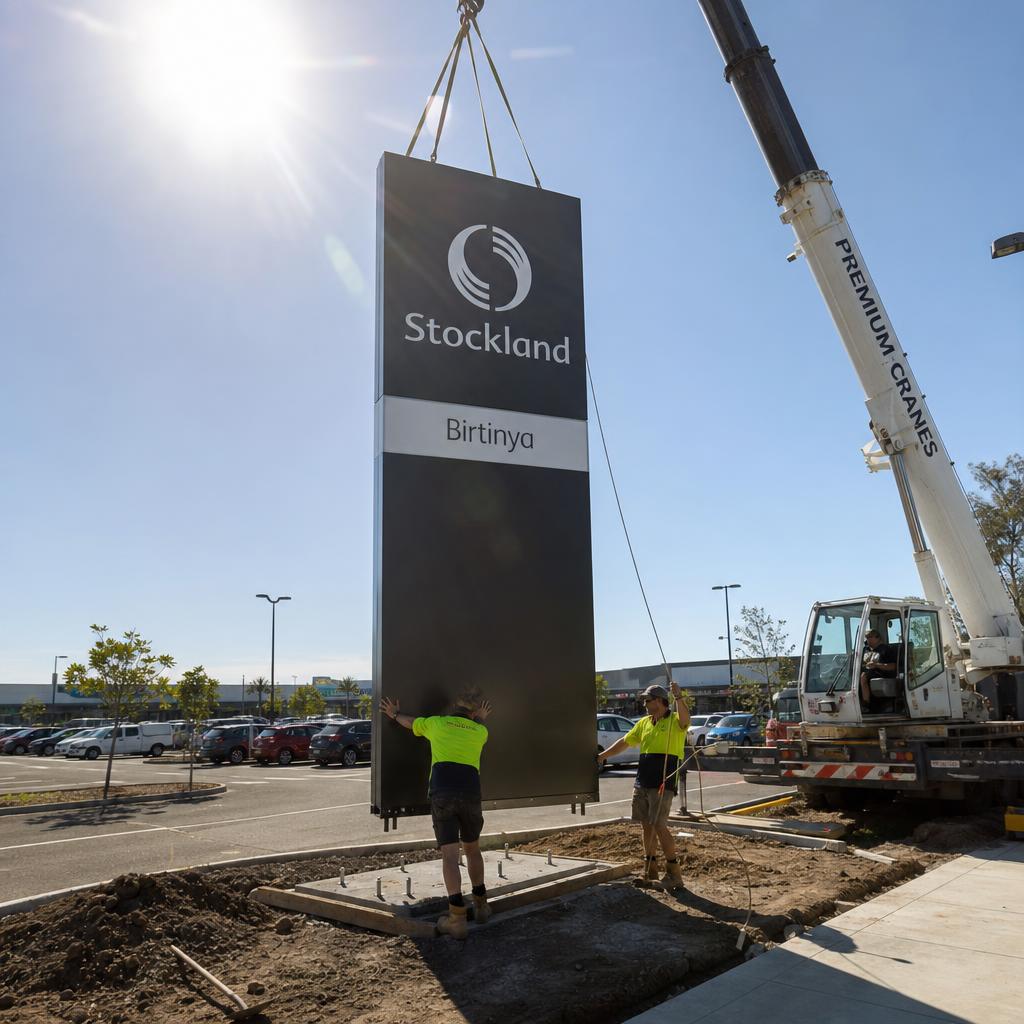
- Pylon signs: Engineer-certified footings and structure
- Large fascia signs: Structural engineer sign-off
- Any sign over 4sqm: Usually requires engineering
Mounting considerations:
- Masonry anchors rated for load
- Stainless or galvanised fixings
- Allowance for thermal movement
- Sealing around penetrations
Indoor Sign Engineering
Minimal structural requirements for most signs:
- Wall fixings appropriate for wall type
- Weight distribution for large pieces
- Suspended signs require ceiling structure assessment
- Rarely needs engineering certification
Electrical Specifications
Outdoor Electrical Requirements
Enclosure ratings:
- IP65 minimum for outdoor electrical (protected from water jets)
- IP67 for ground-level or high-exposure locations
- NEMA 4X for corrosive environments
Component specifications:
- Outdoor-rated LED drivers
- UV-resistant wiring
- Waterproof connections
- Surge protection recommended
Compliance:
- Licensed electrician installation mandatory
- Certificate of compliance required
- RCD protection required
- Appropriate circuit breaker protection
Indoor Electrical Requirements
Enclosure ratings:
- IP20 minimum (protection against solid objects >12mm)
- IP44 for damp areas (kitchens, bathrooms)
Component specifications:
- Standard LED drivers acceptable
- General-purpose wiring adequate
- Standard connections suitable
Compliance:
- Licensed electrician still required for permanent connections
- Plug-and-play options available for many applications
Cost Comparisons
Why Outdoor Signs Cost More
Materials premium: Outdoor-rated materials cost 20-50% more than indoor equivalents
Construction requirements:
- Sealed edges
- Waterproof electrical enclosures
- Structural engineering
- Heavy-duty mounting hardware
Installation complexity:
- Working at height
- Weather dependency
- Traffic management (if applicable)
- Coordination with other trades
Regulatory costs:
- Council permits ($500-$3,000)
- Engineering certification ($500-$2,000)
- Electrical compliance certificates
Typical Price Ranges
Comparable sign types:
| Type | Indoor Version | Outdoor Version | Difference |
|---|---|---|---|
| Illuminated panel (1sqm) | $800-$1,500 | $2,000-$4,000 | +150% |
| 3D lettering (per letter) | $50-$100 | $100-$200 | +100% |
| Digital display (55") | $1,500-$3,000 | $4,000-$10,000 | +200% |
| Vinyl graphics (per sqm) | $60-$120 | $100-$200 | +70% |
Making the Right Choice
Can't I Just Use Indoor Signs Outdoors?
Common attempts (and failures):
Foam board sign outdoors:
- Warps within weeks
- Delaminates in rain
- Fades in UV
- Lifespan: 1-3 months
Standard acrylic outdoors:
- Yellows within 1-2 years
- Becomes brittle
- Cracks in temperature extremes
- Lifespan: 1-3 years (looking acceptable only 6-12 months)
Budget vinyl outdoors:
- Fades rapidly
- Edges lift and peel
- Colours shift unevenly
- Lifespan: 6-18 months
The lesson: Using indoor materials outdoors costs more long-term through frequent replacement.
When to Upgrade Specifications
Indoor signs that may need outdoor specs:
- Window-facing graphics (UV exposure)
- Near external doors (temperature variation)
- High-humidity environments
- Industrial settings (chemicals, dust)
Outdoor installations that may use lighter specs:
- Fully covered/protected locations
- Short-term installations (events)
- Low-importance/low-visibility locations
Summary: Indoor vs Outdoor Signage
| Factor | Indoor Signage | Outdoor Signage |
|---|---|---|
| Materials | Standard grades | UV/weather rated |
| Durability | 5-15+ years | 5-10 years typical |
| Electrical | IP20, standard | IP65+, outdoor rated |
| Engineering | Rarely needed | Often required |
| Permits | Usually exempt | Often required |
| Cost | Lower | 1.5-3x higher |
| Installation | Simpler | More complex |
---
Need signage that works in any environment? SPARC's digital signage solutions include both indoor and outdoor-rated displays managed from a single platform. Explore SPARC pricing to simplify your signage across every location.
Signage in Semi-Exposed Areas: Covered Walkways, Awnings and Carparks
Not every sign lives purely indoors or purely outdoors. Covered walkways, alfresco dining areas, verandah fascias, awning-mounted signs, and undercover carpark signage all sit in a grey zone that trips up a lot of sign buying decisions. The roof overhead protects against direct rain, but it doesn't protect against much else.
Three things reach a sign that never sees direct sun:
- UV, through reflection and scatter. A sign under a deep awning still fades over time from ambient UV bouncing off pavement, glass or car bonnets.
- Humidity and temperature swings, often worse than fully outdoor locations — airflow gets trapped under a roofline and condensation forms overnight even where the sign never gets rained on.
- In undercover carparks, vehicle residue. Exhaust, road grime and airborne moisture that indoor-rated materials are simply not built to handle.
The common mistake is assuming "under a roof" means "indoor", and specifying indoor-grade vinyl, laminate or substrate accordingly.
In practice, treat most semi-exposed signage as outdoor-rated, or close to it.
- You can sometimes step back from the heaviest-duty outdoor hardware — fully sealed edge profiles for driving rain, for instance
- You cannot step back on print media, laminate and fixings, which should still be UV-stable and corrosion-resistant
If a sign is going anywhere near a carpark, loading dock, alfresco zone or covered breezeway, spec it as if it will see weather — because functionally, it will.
Auditing Your Existing Signage for the Right Environmental Rating
If you've inherited a site with existing signage, or you're not sure whether what's already up was specified correctly, a simple walk-through audit can save you from repeat failures. Look for these signs that a sign is using the wrong-rated material for its environment:
- Fading or chalking on the surface — a powdery, dulled finish usually means UV-sensitive material has been used somewhere it gets regular light exposure, indoors or out.
- Lifting or bubbling edges — this points to moisture getting under a laminate or vinyl layer that wasn't sealed or rated for damp conditions.
- Warping or bowing of the substrate — boards like foam PVC or some composites will distort with temperature and humidity swings if they're not the outdoor-grade version.
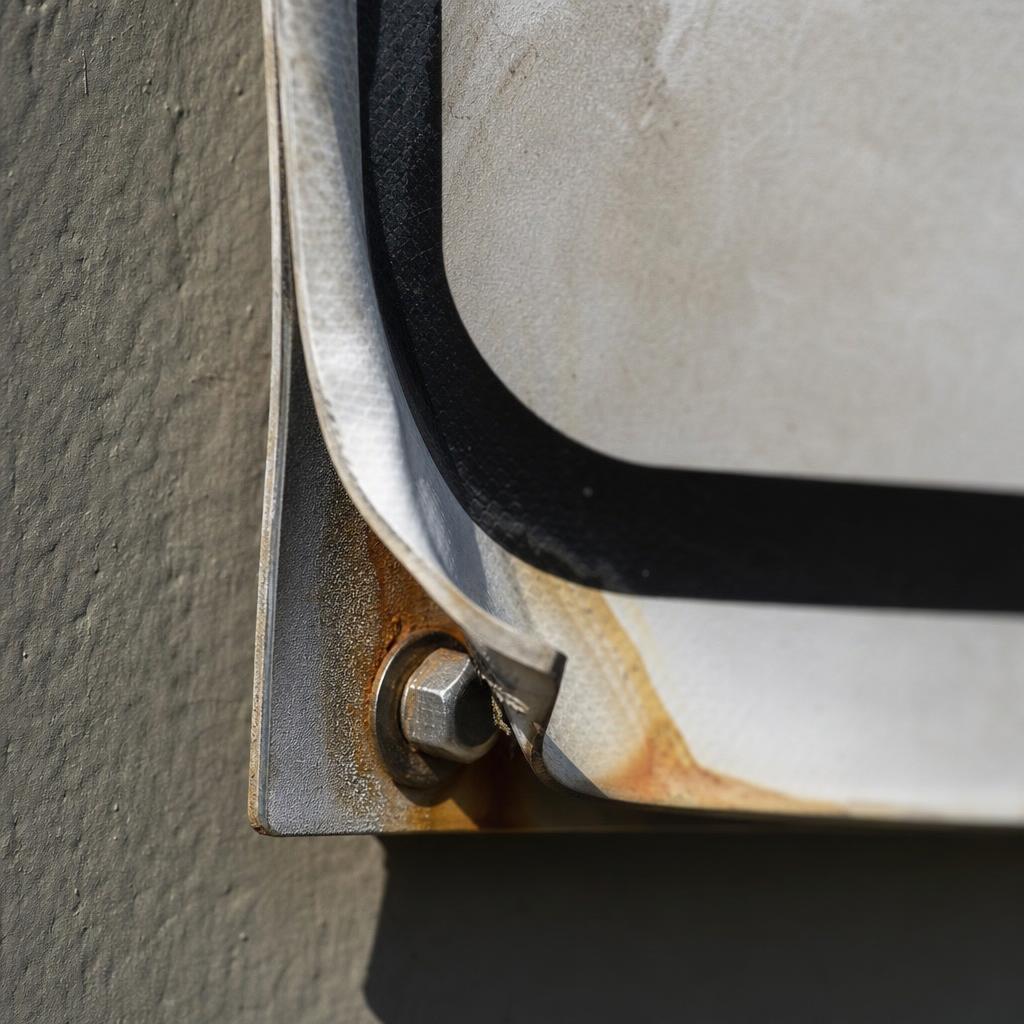
- Rust or corrosion on fixings — even if the sign face looks fine, standard steel screws or brackets used outdoors will corrode well before the sign itself fails.
- Cracking or brittleness in the material — a sign that's gone stiff and starts cracking at the edges has usually had UV exposure it wasn't built to withstand.
Walking your site with this list in hand, room by room and entry point by entry point, usually turns up at least one or two signs quietly failing ahead of schedule. Catching it early is cheaper than a full replacement after the substrate has already warped or the print has delaminated.
Outdoor vs indoor signs FAQs
How can I tell if a sign is rated for outdoor use?
Outdoor-rated signage is specified with UV-stable print media and laminate, weather-resistant substrates, and corrosion-resistant fixings, and this is usually documented on the job spec or supplier data sheet at the time of manufacture. If you don't have that paperwork, physical clues help: outdoor signs typically have sealed or capped edges, stainless or coated hardware rather than standard steel screws, and a laminate finish rather than raw print. If you're unsure, it's worth asking your sign supplier to check the original specification before assuming either way.
What happens if I install an indoor sign outside?
It will start to degrade faster than an outdoor-rated equivalent, though how fast depends on the material, the climate, and how exposed the location is. Common failure points are colour fading, brittleness and cracking from UV exposure, and moisture getting into layers that weren't sealed for damp conditions, causing bubbling or delamination. Some indoor materials will hold up for a while in a sheltered outdoor spot, but they're not built for it and will generally fail well ahead of an outdoor-rated sign in the same position.
Can outdoor-rated signage be used indoors instead?
Yes, outdoor-rated materials will generally perform fine indoors, since they're built to handle more extreme conditions than an indoor environment presents. The main consideration is cost and finish rather than performance: outdoor materials are often a heavier-duty spec than an indoor application needs, so it can be paying for durability you don't require. It's not wrong to use outdoor-rated signage indoors, just not always the most cost-effective choice.
Do all outdoor signs need to be fully waterproof?
Not necessarily to the same degree. A freestanding pylon sign facing direct weather needs a different level of water sealing than a sign under an awning or in a semi-exposed walkway. What matters is matching the construction to the actual exposure the sign will face, including rain, wind-driven moisture, and humidity, rather than assuming every outdoor sign needs identical waterproofing.
How long does outdoor signage typically last before it needs replacing?
This varies considerably based on the material grade used, the orientation and sun exposure of the sign, and the local climate, including proximity to the coast where salt air accelerates corrosion. Rather than a fixed timeframe, it's more useful to think about it as a function of spec versus environment: a well-specified outdoor sign in a harsh position can outlast a poorly matched sign in a milder one. Regular visual checks, like the audit checklist above, are the most reliable way to know when a sign needs attention.
Is vehicle signage the same as outdoor building signage?
They share some requirements, like UV-stable print and weather resistance, but vehicle signage has extra demands building signage doesn't. It needs to handle constant flexing as the vehicle moves and the panels vibrate, exposure to road grime and washing chemicals, and full-time direct sun in a way that shifts throughout the day. Vehicle wrap vinyl and laminate are a distinct product category from static outdoor sign substrates for this reason, even though both fall under the broader "outdoor" umbrella.
Is outdoor signage always more expensive than indoor signage?
Not always, but outdoor-rated materials, laminates, and hardware do generally cost more than their indoor equivalents because they're built to handle more. The bigger cost driver is usually size, complexity, and installation requirements rather than indoor versus outdoor status alone. A small indoor sign can easily cost more than a simple outdoor one once you factor in mounting method, illumination, or custom fabrication.