Looking for "sign makers near me"? You're making one of the most visible investments in your business. The right signage attracts customers, builds brand recognition, and pays for itself many times over. The wrong choice wastes money and misrepresents your brand.
This guide helps you find, evaluate, and choose between local sign makers, national sign companies, and modern digital signage solutions.
Understanding Your Options
Before searching for commercial sign installers, understand the different types of providers:
Local Sign Fabricators
Small to medium businesses that design, manufacture, and install signage locally.
Advantages:
- Face-to-face service and site visits
- Local reputation to protect
- Understanding of local council requirements
- Support local economy
Disadvantages:
- Limited by their equipment and capabilities
- Quality varies significantly between providers
- May not offer digital solutions
- Capacity constraints can affect timelines
National Sign Companies
Large companies with multiple locations offering standardised products and services.
Advantages:
- Consistent quality and processes
- Larger capacity for big projects
- Often more competitive pricing
- National warranty support
Disadvantages:
- Less personal service
- May use subcontractors for installation
- Cookie-cutter solutions
- Less flexibility for custom requirements
Franchise Sign Businesses
Brands like Signarama, Signwave, or Snap that operate as locally-owned franchises.
Advantages:
- Brand standards ensure baseline quality
- Local ownership with national backing
- Access to group buying power
- Standardised pricing and processes
Disadvantages:
- Variable between franchisees
- Limited to franchise product range
- May have territorial restrictions
- Franchise fees affect pricing
Digital Signage Providers
Companies providing screens and software for dynamic digital displays.
Advantages:
- No local installation required (ship anywhere)
- Remote content management
- Instant updates without costs
- Measurable results
Disadvantages:
- Requires power and potentially internet
- Higher upfront hardware cost
- Ongoing software subscription
- Not suitable for all applications
How to Evaluate Sign Makers
Credentials to Check
Business Registration: Verify they're a registered business with a valid ABN. Check the ABN Lookup website.
Insurance: Ask for Certificate of Currency showing: - Public liability (minimum $10 million) - Professional indemnity - Workers compensation
Trade Qualifications: For illuminated signs, installation must be done by or supervised by a licensed electrician.
Industry Membership: Membership in Signs Australia or ASGA indicates professional commitment, though absence doesn't necessarily indicate problems.
Portfolio Assessment
A quality sign maker should provide: - Photos of completed work (not renders or supplier images) - Local examples you can visit - Projects similar to yours in scope - References from recent customers
Red flag: If they can't show Melbourne/Sydney/Brisbane work (your city), they may be inexperienced in your area.
Quote Comparison
Request detailed written quotes including: - Design and artwork (number of concepts, revisions) - Materials specification (brand/type of materials) - Fabrication and manufacturing - Delivery to site - Installation and mounting - Electrical connection (if applicable) - Council permit application (if required) - Warranty terms and duration - Payment terms and schedule
Warning: The cheapest quote often excludes items the others include. Compare specifications, not just prices.
Questions to Ask Sign Makers
About Their Business
- How long have you been operating?
- Can I visit your workshop/showroom?
- Who will be my point of contact throughout the project?
- What's your current lead time for projects like mine?
- Do you manufacture in-house or outsource?
About Your Project
- Have you done similar projects before?
- Will you conduct a site survey before quoting?
- How do you handle council permits in my area?
- What happens if there are issues during installation?
- Who is responsible for making good any damage during installation?
About Ongoing Support
- What's included in the warranty?
- How do I contact you if something fails?
- What's your typical response time for repairs?
- Do you offer maintenance contracts?
- How much do replacement parts/repairs typically cost?
Warning Signs to Avoid
Immediate Red Flags
- No physical business address – Operate from home or won't disclose location
- Pressure to decide immediately – "This price is only valid today"
- Large deposits – Industry standard is 30-50% deposit, not 80%+
- Cash only – Professional businesses offer card and bank transfer
- No written quote – Verbal agreements are unenforceable
- Can't provide references – Every established business has satisfied customers
Yellow Flags (Proceed with Caution)
- No website or very basic web presence – May be starting out or not invested in their business
- Only mobile contact – Could indicate sole operator with limited capacity
- Very low prices – Either cutting corners or using inferior materials
- Very long lead times – May indicate cash flow or capacity issues
- Reluctant to meet in person – Could be legitimate but warrants caution
The Digital Alternative
Here's what many local sign makers won't tell you: for many applications, digital signage is now more cost-effective than traditional.
When Digital Beats Traditional
Regularly updated content: If you change promotions, pricing, or messaging more than quarterly, digital signage eliminates ongoing production costs.
Multiple locations: Manage content across unlimited sites from one dashboard. No need to coordinate with sign makers in each area.
Measurable results: Digital signage platforms can report what played when. Traditional signage offers no measurement.
Testing and optimisation: A/B test different messages to see what works. Impossible with static signs.
Cost Comparison Example
Scenario: Retail business updating promotional signage monthly
Traditional approach (annual): - Initial signage: $3,000 - Monthly updates ($400 × 12): $4,800 - Annual total: $7,800
Digital approach (annual): - Display hardware: $2,500 - Annual software: $500 - Content (DIY with templates): $0 - Annual total: $3,000 (Year 1) / $500 (subsequent years)
The break-even occurs within months, and savings compound annually.
Making Your Decision
Choose a Local Sign Maker When:
- You need complex fabricated signage (3D lettering, illuminated fascias)
- Your project requires council permits they can navigate
- You value face-to-face relationships
- It's a one-time installation unlikely to change
Choose Digital Signage When:
- Content changes frequently
- You manage multiple locations
- You want to measure effectiveness
- Budget is a consideration long-term
Consider a Hybrid Approach:
Many businesses benefit from both: - Traditional signage for permanent branding - Digital signage for promotions and dynamic content
Finding Sign Makers in Your Area
Search Strategies
Google Maps: Search "sign maker" + your suburb for the most local results
Industry Directories: Signs Australia member directory lists qualified providers
Trade Recommendations: Ask your shopfitter, builder, or architect for recommendations
Business Networks: Local business chambers often have preferred supplier lists
Questions for Initial Contact
When calling sign makers for the first time:
- "Do you handle [type of signage you need]?"
- "What areas do you service?"
- "What's your typical lead time currently?"
- "Can you send me examples of similar work?"
- "Are you available for a site visit this week?"
---
Need signage you can update yourself without calling a sign maker every time? SPARC puts you in control with digital signage that's simple to manage from anywhere. Explore SPARC pricing to see the difference.
Sign Maker vs. Sign Installer vs. Full-Service Signage Company
Search results for "sign makers near me" throw up three different types of business, and conflating them is one of the most common ways businesses end up disappointed. Knowing which one you're actually dealing with before you get a quote saves a lot of back-and-forth later.
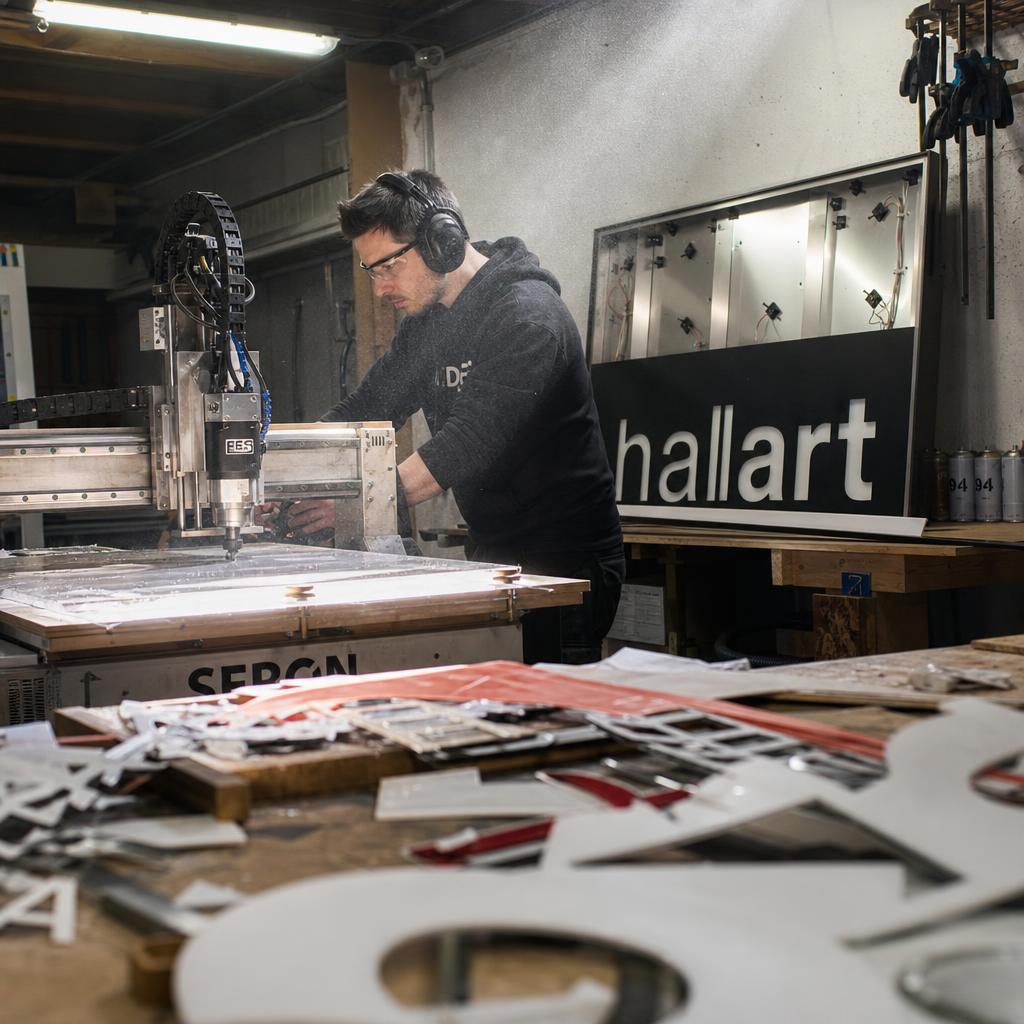
A sign maker is a fabricator. They design, print, cut or manufacture the sign itself — vinyl graphics, acrylic letters, aluminium composite panels, illuminated cabinets.
Some sign makers are excellent at production but do not install anything. They hand over the finished product and expect you to arrange your own fitting.
If you go that route, confirm two things separately:
- Who is putting the sign on the wall, the vehicle or the shopfront
- Whether that installer has done that specific job before
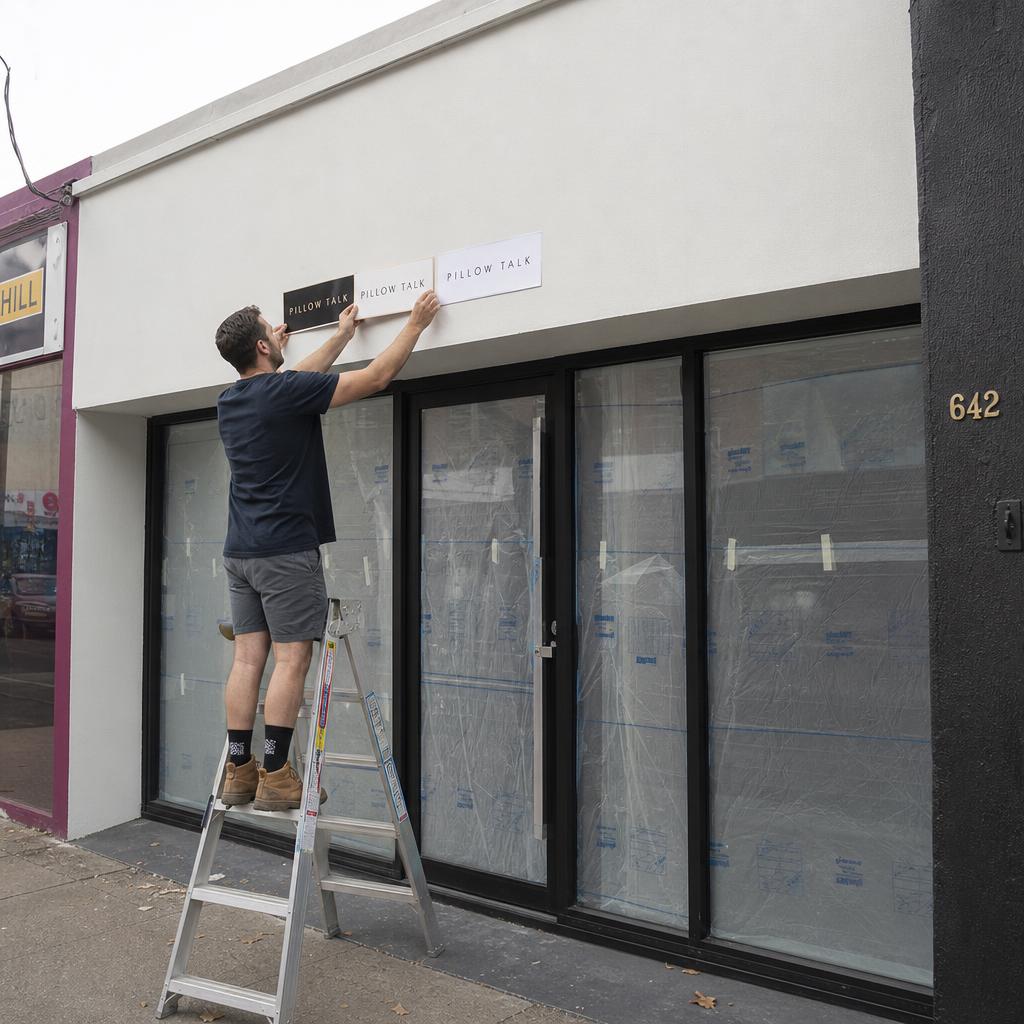
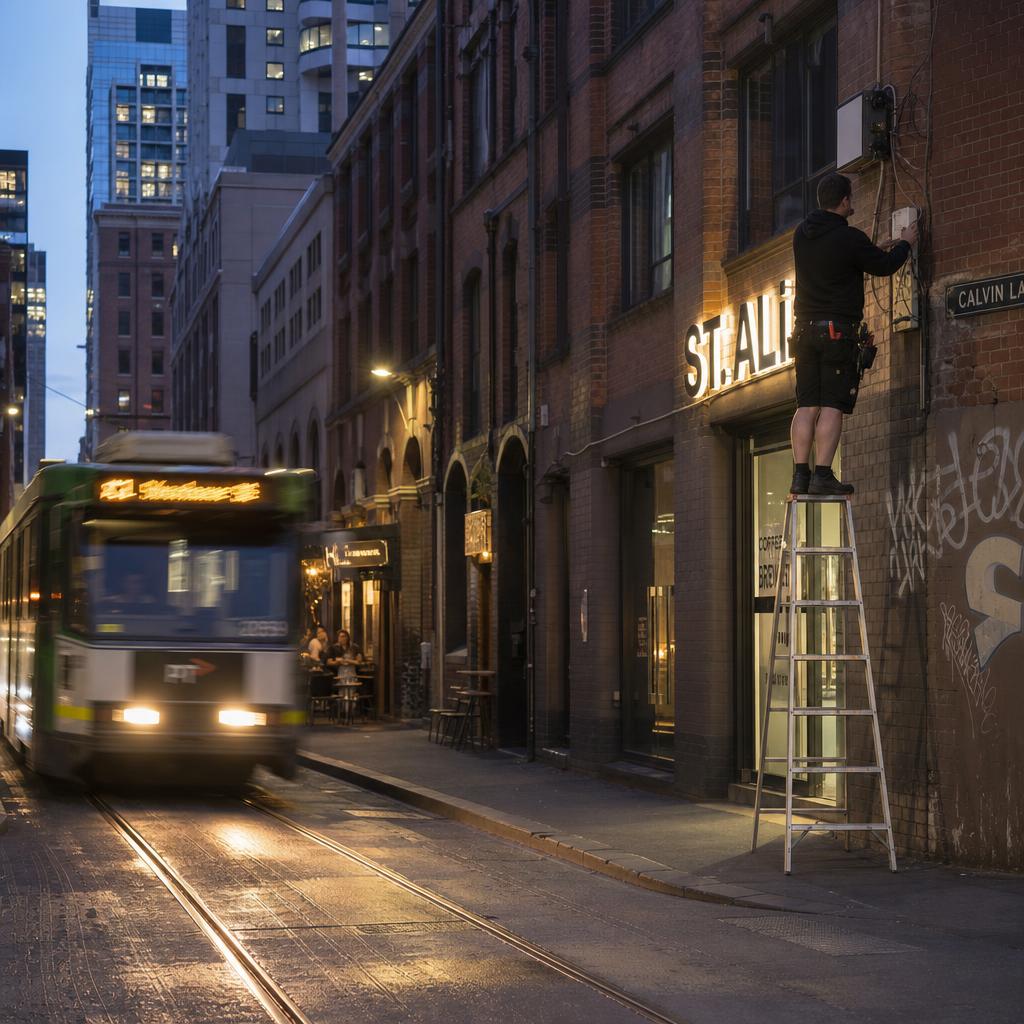
A sign installer is the opposite: a fitting specialist who mounts signage manufactured elsewhere. Good installers understand substrate types, weatherproofing, electrical connections for illuminated signs, and council-compliant mounting heights — but they're not always involved in the design or material selection, so a poor initial specification can leave them installing a sign that was never right for the location in the first place.
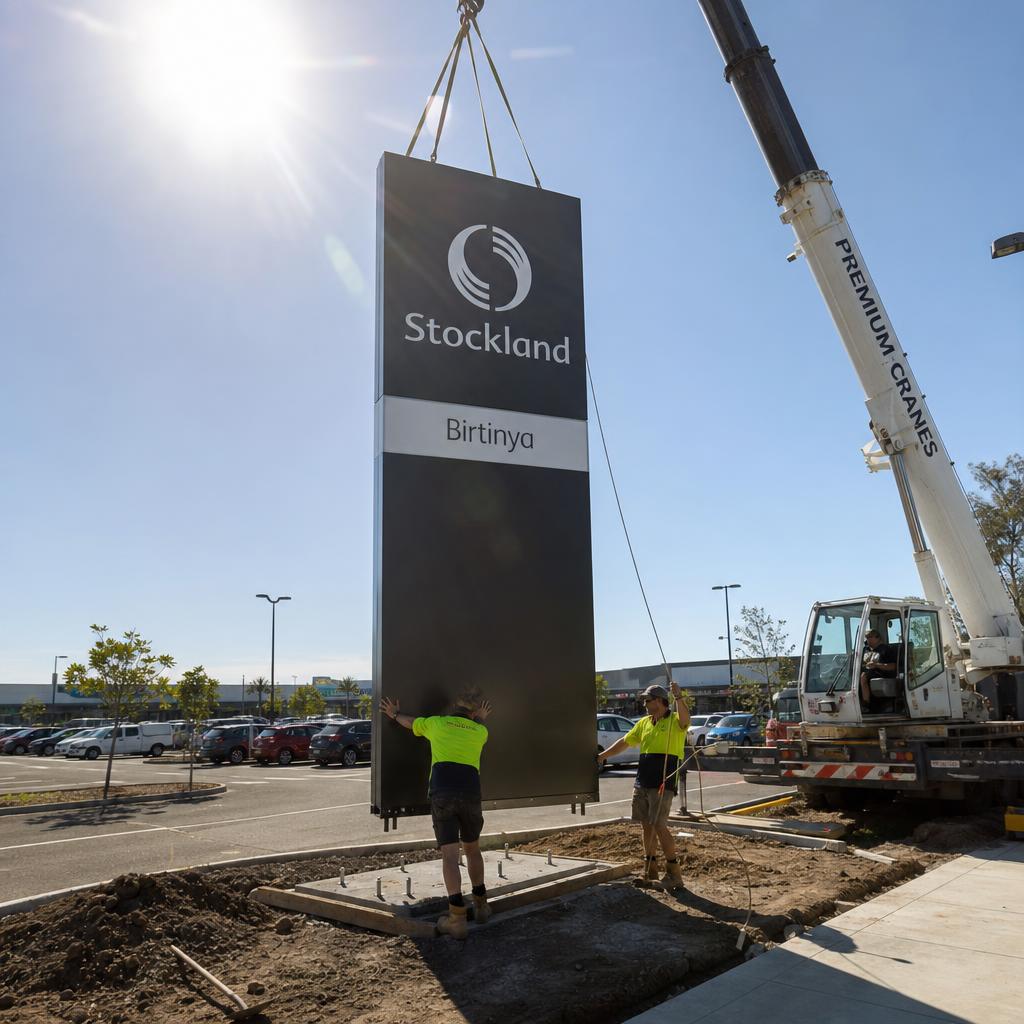
A full-service signage company manages both ends: design, fabrication, and installation under one contract, with one point of accountability. This is usually the safer option for anything beyond a single static sign, because it removes the handoff risk between fabricator and installer — there's no argument later about whose fault a poor fit or premature fade was. It also tends to be faster, since you're not coordinating two separate businesses' schedules.
Neither model is inherently better for every job. A simple one-off banner or decal might not need a full-service provider.
But for shopfront signage, vehicle wraps, or anything involving illumination or council permits, ask directly:
> "Do you design, manufacture and install this yourselves, or do you subcontract any part of it?"
Subcontracting installation is not automatically a red flag. But they should tell you upfront, and stand behind the subcontractor's work with the same warranty as their own.
What a Fair Signage Quote Actually Breaks Down Into
A proper signage quote is itemised, not a single lump figure. At minimum, expect separate lines for:
- Design and artwork — including how many revision rounds are included
- Materials — with the specific substrate, vinyl grade or panel type named, not just "premium materials"
- Fabrication or print production
- Installation labour
- Council permit or liaison fees, if the job needs them
If a quote lumps everything into one number, ask for it to be itemised before you compare it against anyone else's. Otherwise you are not comparing like for like.
Four things separate a fair quote from a problematic one:
- Vague material descriptions. "Vinyl" without a grade or brand, or "LED" without a rated lifespan, makes it impossible to judge whether you are paying for five years or one.
- Missing installation detail. Mounting method, whether scaffolding or an EWP (elevated work platform) is needed for height, and who is responsible for site access or power connection for illuminated signs.
- No warranty terms on materials or workmanship. A business confident in its work states this without being asked.
- An unusually large deposit relative to the job size, with no milestone structure on larger projects.
Four things to confirm before signing anything:
- What happens if the artwork proof does not match once produced
- The timeline, with a real installation date — not just "production time"
- Who owns the artwork files afterwards
- The process if the sign is damaged during installation
A company that answers these plainly, in writing, is generally one you can trust to see the job through. Vague or defensive answers to any of them are a warning sign in themselves.
Choosing a sign maker: FAQs
How much does a business sign cost in Australia?
Pricing varies enormously depending on size, materials, illumination, and installation complexity, so there's no single figure that applies across the board. A basic non-illuminated shopfront sign will cost considerably less than an illuminated channel-letter sign or a full vehicle wrap. The only reliable way to know what your project will cost is to get an itemised quote from at least two or three providers so you can compare like for like.
Do I need council approval for a new business sign?
In most Australian councils, yes — signage typically requires either a permit or falls under exempt development rules depending on size, location, and whether it's illuminated. Requirements differ significantly between councils, so this isn't something to assume either way. A signage company that regularly works in your local area should be able to tell you whether your proposed sign needs approval and can often help manage that application.
How long does it take to get a sign made and installed?
Timelines depend on the complexity of the design, whether custom fabrication is involved, and installation scheduling. Simple signage can often move faster than illuminated or custom-fabricated pieces, which may involve longer production lead times. Ask for a realistic end-to-end timeline that separates design approval, production, and installation, rather than a single vague estimate.
Should I choose a local sign maker or a national chain?
Both have trade-offs. A local sign maker generally has better familiarity with your specific council's permit requirements and can usually get someone on-site faster if there's an issue after installation. A national company may have more standardised processes and broader material sourcing. For most small and medium businesses, local knowledge of council rules and faster after-installation support tends to outweigh the scale advantages of a national provider.
What's the difference between vehicle wraps and vehicle signage/decals?
A full or partial vehicle wrap covers most or all of the vehicle's exterior in printed vinyl and is typically used for maximum brand visibility. Vehicle signage or decals apply logos, contact details, and graphics to specific panels rather than the whole vehicle. Decals are generally quicker to apply and remove, while wraps offer more visual impact but a bigger upfront investment and more involved installation.
How long should a sign last before it needs replacing or refreshing?
Lifespan depends heavily on the material, whether it's exposed to direct sun and weather, and the quality of the print or fabrication. Cheaper vinyl and lower-grade materials fade and degrade faster than higher-grade equivalents. Ask any sign maker what lifespan or fade rating applies to the specific material they're quoting, rather than accepting a general assurance that it "will last."
Can a sign maker help with rebranding across multiple sign types at once?
Yes — this is one of the practical advantages of using a full-service signage company rather than sourcing each sign type separately. If you're updating shopfront signage, vehicle signage, and internal signage together as part of a rebrand, a single provider working from one set of brand files can keep colours, fonts, and materials consistent across everything, which is harder to guarantee when different pieces are made by different suppliers.