LED signage installation covers everything from mounting a single indoor digital poster in an afternoon to engineering a multi-panel outdoor video wall that needs council sign-off and a structural engineer.
The right approach depends on three things:
- Where the sign will live
- How far away people read it from
- How often the message needs to change
This guide walks first-time buyers through the types of LED signage available in Australia, the factors that genuinely move cost, and what installation looks like in practice — so you go into a vendor conversation asking the right questions instead of guessing at specs.
If your project is a large-scale, multi-panel enterprise video wall rather than a single business sign, our video wall deployment guide covers project planning, stakeholder sign-off and rollout timelines in more depth. This post is aimed at the broader range of buyers working out what they need in the first place.
What Is LED Signage, and Which Type Do You Need?
LED signage uses clusters of light-emitting diodes, arranged into panels or modules, to display anything from a static price to full-motion video.
Unlike a commercial TV or standard digital screen, direct-view LED signs are built from individual tiles. That means they:
- Can be built to almost any size and shape
- Run at far higher brightness, for daylight or outdoor viewing
- Are designed for continuous, always-on commercial use, not a few hours of evening viewing
Before you talk to a vendor, it helps to have a rough answer to four questions:
- Will the sign be indoors, outdoors, or visible through glass?
- How far away is the nearest viewer expected to read it from?
- Does the message need to change daily (promotions, menus, wayfinding) or rarely (branding, static signage)?
- Is this a single display, or part of a larger network of screens across one or more sites?
Your answers to these four questions do more to narrow down the right product than any spec sheet, and they're the same questions a good vendor will ask you first.
LED Signage Types Compared
There's no single "LED sign" product; it's a category that spans simple static displays through to enterprise video walls. The table below gives a qualitative comparison to help you place your own project.
| Sign Type | Typical Use Case | Best Environment | Relative Cost Tier | Content Flexibility |
|---|---|---|---|---|
| Static/single-colour LED | Simple pricing, open/closed, directional messaging | Indoor or outdoor | Lower | Very limited |
| Full-colour digital poster | Retail windows, reception areas, small promotions | Indoor | Lower-mid | High |
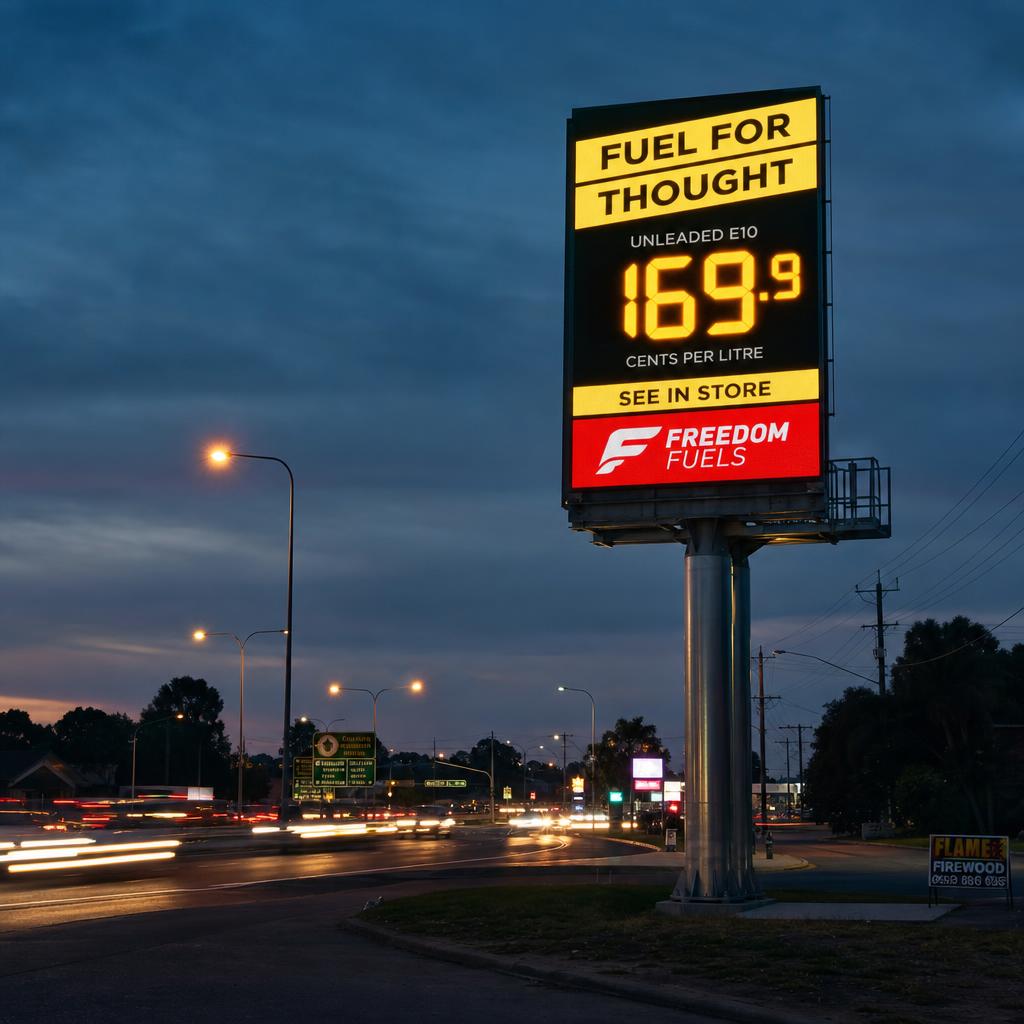
| Outdoor pylon or monument sign | Roadside branding, fuel and retail pricing | Outdoor | Mid | Moderate-high |
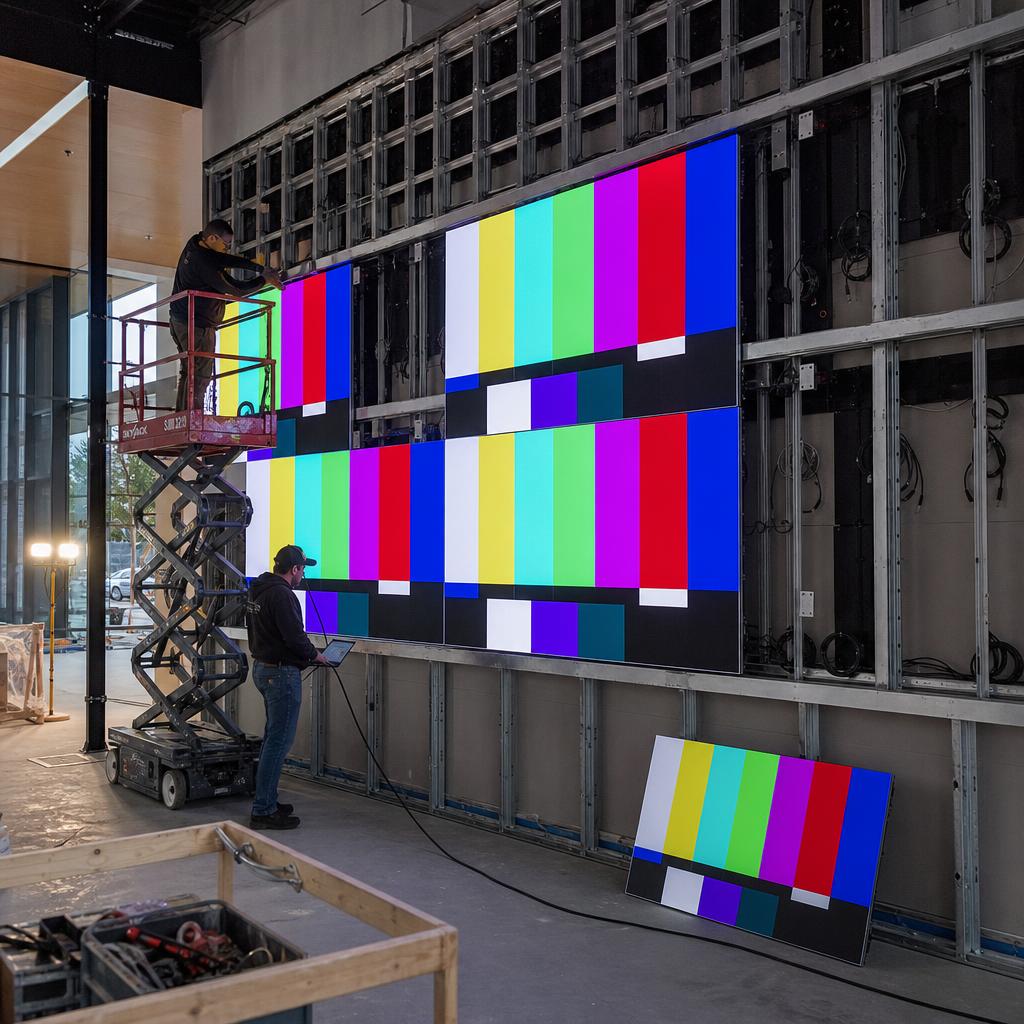
| Fine-pitch indoor video wall | Lobbies, control rooms, retail feature walls | Indoor | Mid-high | Very high |
| Large-format outdoor LED wall | Stadiums, transport hubs, major building façades | Outdoor | Highest | Very high |
Two things worth pulling out of that table:
1. Cost tracks resolution and environmental protection, not size. A small fine-pitch indoor wall can cost more per square metre than a much larger, coarser outdoor sign.
2. Content flexibility is the trade-off first-time buyers most often underrate. A static LED sign is cheap and reliable, but every message change means physically reprogramming or replacing it. A full-colour programmable display updates in seconds from a browser or app.
Why Does Outdoor LED Cost More Than Indoor?
This is the single biggest fork in the road for LED signage installation, and it affects almost every other decision.
Brightness. Indoor displays typically run at a fraction of the brightness of outdoor units. A screen bright enough to read in direct Australian sunlight would be uncomfortably harsh in a dim lobby, so indoor and outdoor panels are built, and rated, differently. Most quality displays include automatic brightness sensors that adjust output through the day, which matters both for eye comfort and for panel longevity.
Weatherproofing (IP rating). Outdoor signage needs an Ingress Protection (IP) rating that reflects genuine exposure to dust, rain and humidity, not just splash resistance. This isn't a box-ticking exercise: sealed housings, conformal-coated circuit boards and drainage design all affect how long an outdoor sign lasts once it's dealing with a Melbourne winter or a tropical Queensland wet season.
Temperature range. Direct sun exposure on a dark LED cabinet can push internal temperatures well above ambient air temperature. Outdoor installations need thermal management, active cooling or ventilation, and components rated for the temperature swings your site actually experiences, especially in regional and inland areas with hot summers.
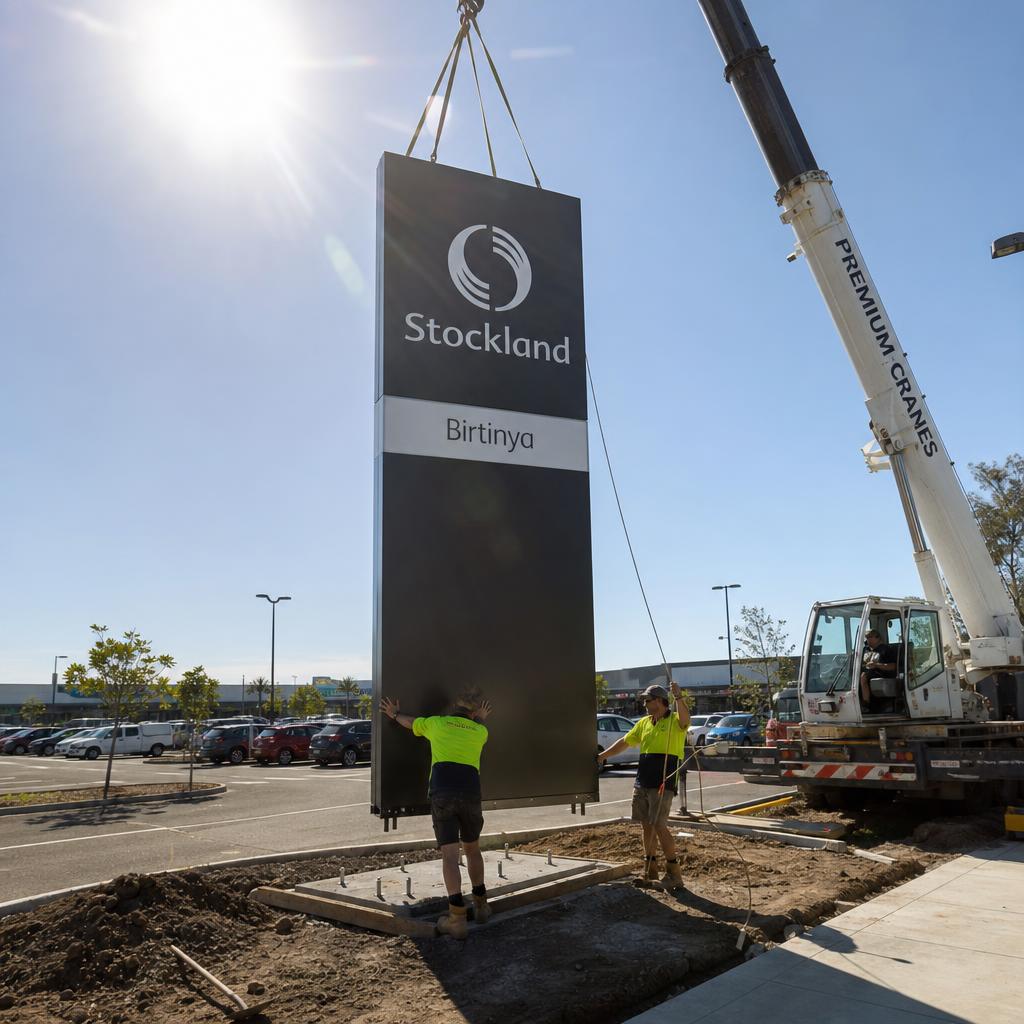
Structural load. Outdoor signs are exposed to wind loading in a way indoor displays never are. Anything mounted on a pole, roof or façade needs to be assessed against local wind loading standards, which is a structural engineering question, not just an electrical one.
Getting the indoor/outdoor spec wrong is one of the most expensive mistakes a first-time buyer can make, because an indoor-rated panel installed outdoors will fail early, and an outdoor-rated panel used indoors is needlessly overbuilt and overpriced for the job.
What Pixel Pitch Do You Actually Need?
Pixel pitch is the distance, in millimetres, between the centre of one LED cluster and the next. A lower number means the pixels sit closer together, giving a sharper image at close range; a higher number means the diodes are more spread out, which is fine, and more cost-effective, when viewers are further away.
The rule of thumb: minimum comfortable viewing distance in metres is roughly the pixel pitch in millimetres.
- 2.5mm pitch — designed to be viewed from about 2.5 metres or further
- 10mm pitch — designed for roughly 10 metres or more, such as a roadside or car park sign
Stand closer than that and the individual pixels become visible, breaking the image into a grid rather than a smooth picture.
This is why pixel pitch, not screen size, is usually the biggest single driver of price for a given display area.
- A large outdoor sign viewed from the road can use a coarse, economical pitch
- A small indoor reception feature wall people stand close to needs a much finer pitch, which pushes cost per square metre up considerably
Match pitch to actual viewing distance rather than defaulting to the finest available resolution. It is one of the easiest ways to keep a project on budget without compromising the result.
What Actually Drives the Cost of an LED Sign?
Rather than quoting figures that go stale the moment supplier pricing shifts, it's more useful to understand the factors that push cost up or down, so you can read a quote critically. In roughly descending order of impact:
- Pixel pitch and resolution. Finer pitch means more diodes, more driver electronics and tighter manufacturing tolerances per square metre, so cost rises sharply as pitch decreases.
- Physical size and panel count. Larger displays need more panels, more structural support, and more processing power to drive them as a single coherent image.
- Indoor vs outdoor rating. Outdoor-rated enclosures, higher brightness components, weatherproofing and thermal management all add cost over an equivalent indoor unit.
- Structural and mounting complexity. A flush wall-mounted indoor display is straightforward. A cantilevered outdoor sign, a façade-integrated wall, or anything requiring engineering certification adds design, materials and labour cost.
- Electrical supply requirements. Larger and outdoor displays often need dedicated circuits, and sometimes a supply upgrade, particularly if the site's existing switchboard is already near capacity.
- Installation access. Ground-level indoor installs are cheap to access. Anything requiring scaffolding, EWP (elevated work platform) hire, or working at height adds labour cost and scheduling complexity.
- Content management software and licensing. Ongoing software subscriptions for scheduling, remote monitoring and content management are usually billed separately from the hardware, and vary depending on the number of screens and features required.
- Ongoing maintenance and content production. Budget for periodic servicing, and for someone, in-house or agency, to actually produce and update the content, or a static sign quickly starts looking stale.
A useful exercise before requesting quotes is to rank these factors by what matters for your specific site, since two vendors quoting the same panel size can land at very different totals depending on how they've handled structural work, electrical supply and software.
What Does LED Installation Involve, Step by Step?
LED signage installation is more than bolting a screen to a wall. A properly run project typically includes:
- Site assessment. A vendor or installer visits the site to check available power, mounting surfaces, structural capacity, sightlines and ambient light conditions. This is also when viewing distance gets measured properly rather than estimated.
- Design and engineering sign-off. For anything beyond a small indoor display, this stage covers structural calculations for wind and dead load (outdoor), mounting bracket design, and confirmation the display will physically fit the intended space.
- Permits and approvals. Outdoor signage, particularly anything visible from a public road, on a heritage-listed building, or above a certain size, often requires council planning approval. Requirements vary significantly between local government areas, so this is worth checking early rather than after hardware has been ordered.
- Electrical works. A licensed electrician runs dedicated circuitry, confirms the supply can handle the sign's peak draw, and installs appropriate isolation and surge protection, particularly important for outdoor installations exposed to lightning-prone areas.
- Structural and mounting work. This covers bracket or frame installation, wall or roof penetrations where relevant, and weatherproofing any external fixings.
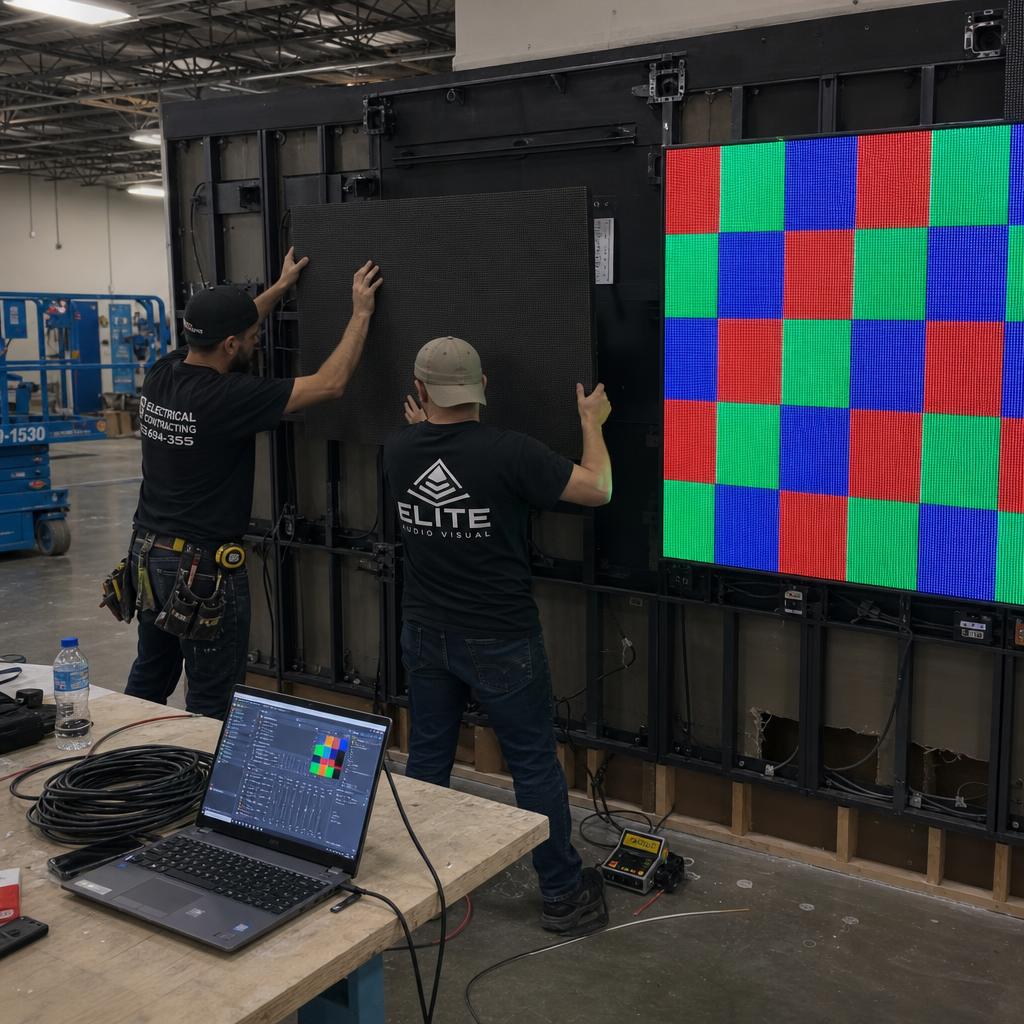
- Panel installation and calibration. Individual LED tiles are mounted, connected and colour/brightness calibrated so the finished display reads as one seamless image rather than a grid of mismatched panels.
- Content system setup and handover. The content management software is configured, connected, and someone on your team is trained to schedule and update content without needing to call the installer every time.
For a straightforward small indoor display, this whole process might take a couple of weeks from order to go-live. A large outdoor installation requiring council approval and structural engineering can run considerably longer, so it's worth asking any vendor for a realistic project timeline, not just a delivery date for the hardware.
How Do You Choose an LED Signage Vendor?
The hardware is only half the decision. A few questions worth asking any LED signage vendor before you commit:
- Where is your support based, and what are your response times? Local, Australian-based support matters more than it seems when a panel fails during trading hours and the fix depends on someone actually being reachable in your timezone.
- What's the warranty on the panels, and does it cover labour as well as parts? Panel warranties vary considerably, and an on-site labour exclusion can turn a "covered" repair into an expensive one.
- Is the content platform reliable, and where is it hosted? Cloud-based content management should stay fast and available regardless of how many screens or sites you're running, which comes down to how the platform is architected and hosted, not just how it looks in a demo.
- Can the solution grow with you? A single-display project today might become a multi-site network next year. Check whether the software and hardware ecosystem supports scaling up without a forklift upgrade of everything you've already installed.
If you'd like to see enterprise-grade LED signage hardware and content management in action, our hardware range covers indoor, outdoor and fine-pitch options, and you can book a demo to see how the content and scheduling platform works before committing to a project. It's also worth reading our guide to common LED wall content mistakes once your hardware is sorted, since a well-installed sign showing poorly designed content still won't do its job.
LED signage installation FAQs
How long does LED signage installation take?
It depends heavily on scope. A small indoor digital poster with straightforward power access can often be installed within one to two weeks of ordering. A larger outdoor sign or video wall that needs council approval, structural engineering and a dedicated electrical supply can take considerably longer, sometimes several months, once approvals are factored in. Ask any vendor for a realistic end-to-end timeline rather than just a hardware lead time.
Do I need council approval for LED signage in Australia?
Often, yes, particularly for outdoor signage visible from a public road, anything above certain size thresholds, or installations on heritage-listed or otherwise regulated buildings. Requirements are set at the local government level and vary between councils, so it's worth checking with your local council, or having your installer check on your behalf, before finalising a design.
What's the difference between LED signage and a normal TV or digital screen?
Commercial TVs and standard digital displays are built from a single panel with a fixed size and are designed for a limited number of viewing hours per day. Direct-view LED signage is built from modular tiles that can be configured to almost any size or shape, runs at much higher brightness for daylight and outdoor readability, and is engineered for continuous, always-on commercial operation.
How do I know what pixel pitch I need?
Start with your minimum viewing distance. As a rough guide, the pixel pitch in millimetres should be roughly equal to or less than the closest viewing distance in metres, so a 4mm pitch display suits viewers standing around 4 metres away or further. A good vendor will confirm this properly during a site assessment rather than relying on a rule of thumb alone.
Can outdoor LED signage handle Australian weather?
Quality outdoor-rated LED signage is built for exactly this: sealed, IP-rated enclosures, conformal-coated electronics, active thermal management and structural design that accounts for local wind loading. The key is making sure the specific product you're buying is genuinely rated for outdoor use, and for your region's conditions, rather than assuming any weatherproof-looking cabinet will do.
What ongoing costs should I budget for beyond the hardware?
Beyond the initial installation, expect ongoing costs for content management software (usually a subscription, priced by screen count and features), periodic maintenance and servicing, electricity to run the display, and either staff time or agency support to keep content fresh. A sign that's cheap to install but never gets updated rarely delivers a good return.
Do I need special software to manage LED signage content?
Yes, in almost all cases. Content management software is what lets you schedule messages, update content remotely, monitor display health, and manage multiple screens from one place. This is typically a separate, ongoing cost from the hardware itself, and the quality of the platform has a real effect on how easy the sign is to actually keep updated day to day.
Ready to scope your project properly? Book a demo with SPARC to see our LED signage hardware and content platform in action, and get a straight answer on what your installation would actually involve.