What Medical Waiting Room Digital Signage Is For
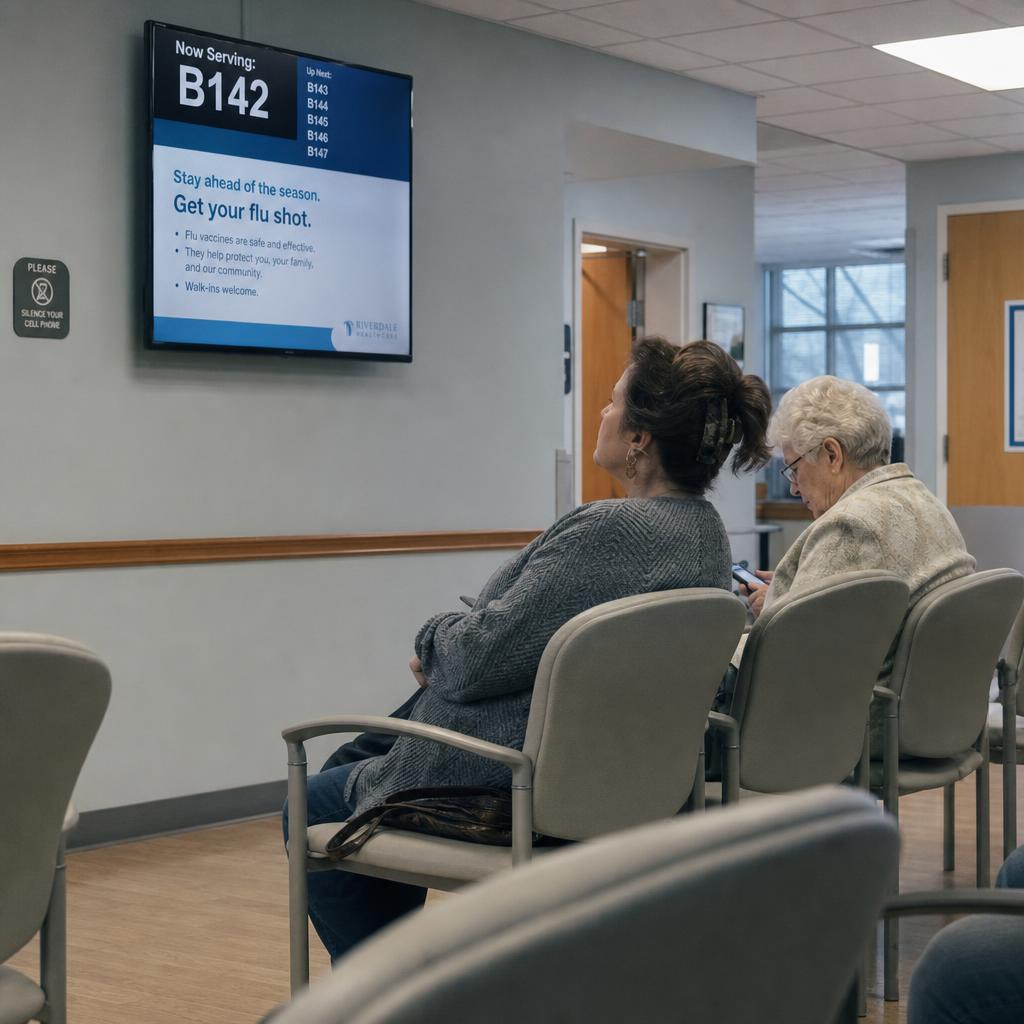
A waiting room screen in a medical clinic has four useful jobs: set expectations about waiting and check-in, answer the questions patients would otherwise ask at the front desk, tell people about services they didn't know the practice offers, and share health information at a moment when people actually have time to read it.
A screen that does those jobs saves reception time and makes the wait feel shorter. A screen playing free-to-air television does none of them, and can show distressing news to people who are already unwell.
What to Show
The content that earns its place is practical, current and specific to your practice:
- Running-late notices, and what to do if you've been waiting longer than expected.
- How to check in, pay and book your next appointment.
- Services the practice offers, such as vaccinations, skin checks, chronic disease care plans or allied health appointments.
- After-hours information, including where to go when the clinic is closed and to call 000 in an emergency.
- Seasonal health campaigns, such as flu vaccination reminders at the start of the season.
- New practitioners and team members, so patients know who they might see.
Keep each slide readable in a few seconds, and keep the loop short and varied enough that someone waiting twenty minutes isn't watching the same three slides on repeat.
What Never to Show
Some content doesn't belong on a waiting room screen at all:
- Patient names, especially alongside a practitioner, room or appointment type. Everyone in the room can read it.
- Anything clinical about an individual.
- Patient testimonials and outcome claims. Promoting a regulated health service is advertising, and Ahpra's guidelines for advertising a regulated health service limit the use of testimonials and claims about treatment outcomes. Check any promotional content against the current guidelines before it goes live.
- Health claims you can't source.
- Sound. Audio in a shared waiting room competes with reception and consult rooms. Use captions instead.
Getting Health Content Right
Health information on a practice screen carries the practice's authority, so it needs the same care as anything a clinician would hand a patient.
Source it from reputable Australian sources, such as government health campaigns and healthdirect Australia. Put a review date on every health slide, and have a clinical lead approve health content before it's displayed. Seasonal content is easy to leave up long past its relevance, so schedule it to expire rather than relying on someone to remember.
Screen Placement and Hardware
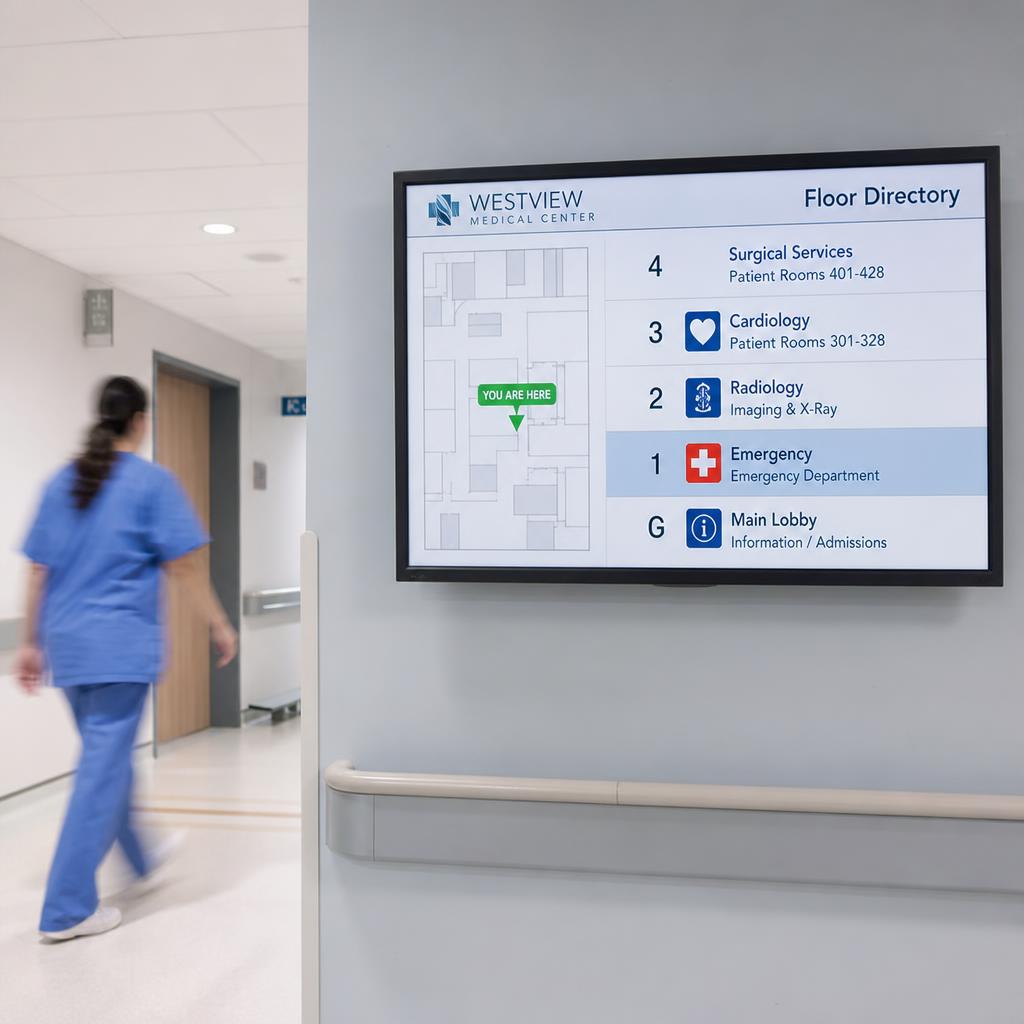
One well-placed screen usually does more than several scattered ones. Put it where people sit rather than where they queue, visible from most of the seating and readable without craning.
A commercial display rated for all-day use is the better choice for a screen that runs through clinic hours, and a 43- to 55-inch panel suits most waiting rooms. Mount it securely, keep cables out of reach, and check with whoever manages cleaning that the surfaces suit your cleaning routine. Our guide to digital signage costs in Australia covers what those screens cost.
Keeping It Current Without Adding Work
The reason most waiting room screens end up showing stale content is that updating them is nobody's job. Scheduling fixes most of that: flu season reminders, public holiday closure notices and new service launches can be set up in advance and removed automatically when they expire.
For practice groups, central management helps further. Practice-wide campaigns can be pushed to every clinic at once, while each site keeps control of its own running-late notices and team introductions.
One Clinic or a Group of Practices?
If you run a single GP clinic with one screen and content that rarely changes, you may not need much. A simple self-serve platform, or even a scheduled playlist on a commercial display, can be enough.
A managed platform starts to earn its place when several things are true at once: more than one site, several people publishing, content that needs to change on a schedule, and a need for consistent branding across practices. That's usually the point where manual updates start slipping.
Where SPARC Fits
SPARC suits multi-site practice groups and allied health networks that want central control without taking every update away from individual clinics. Role-based access lets head office manage practice-wide content while each clinic handles its own notices. Scheduling handles seasonal campaigns, and content is hosted on AWS in Sydney.
SPARC is hardware-agnostic, so it can run on commercial displays you already have, and every plan includes a 14-day free trial. See healthcare digital signage for more, or our practical guide to hospital digital signage if you're working at a larger scale.
Frequently Asked Questions
What should I put on a GP clinic waiting room screen?
Practical, current information: running-late notices, how to check in and pay, services the practice offers, after-hours arrangements, seasonal campaigns such as flu vaccination reminders, and introductions to new practitioners.
Can we show patient names on the waiting room screen?
It's best avoided. A name on a public screen is visible to everyone in the room, particularly if it appears with a practitioner or appointment type. Keep identifying information off shared screens.
Does content on waiting room screens count as advertising?
Promotional content about your services is advertising a regulated health service. Ahpra's advertising guidelines limit testimonials and claims about treatment outcomes, so check promotional slides against the current guidelines.
Is free-to-air TV a good choice for a medical waiting room?
Usually not. You can't control what it shows, including distressing news, and it doesn't reduce front-desk questions or tell patients about your services the way purpose-made content does.
How much does a waiting room screen cost?
A 43- to 55-inch commercial display was advertised for about $680 to $1,700 in Australia in September 2026, plus software and installation. Our digital signage cost guide breaks the full budget down.