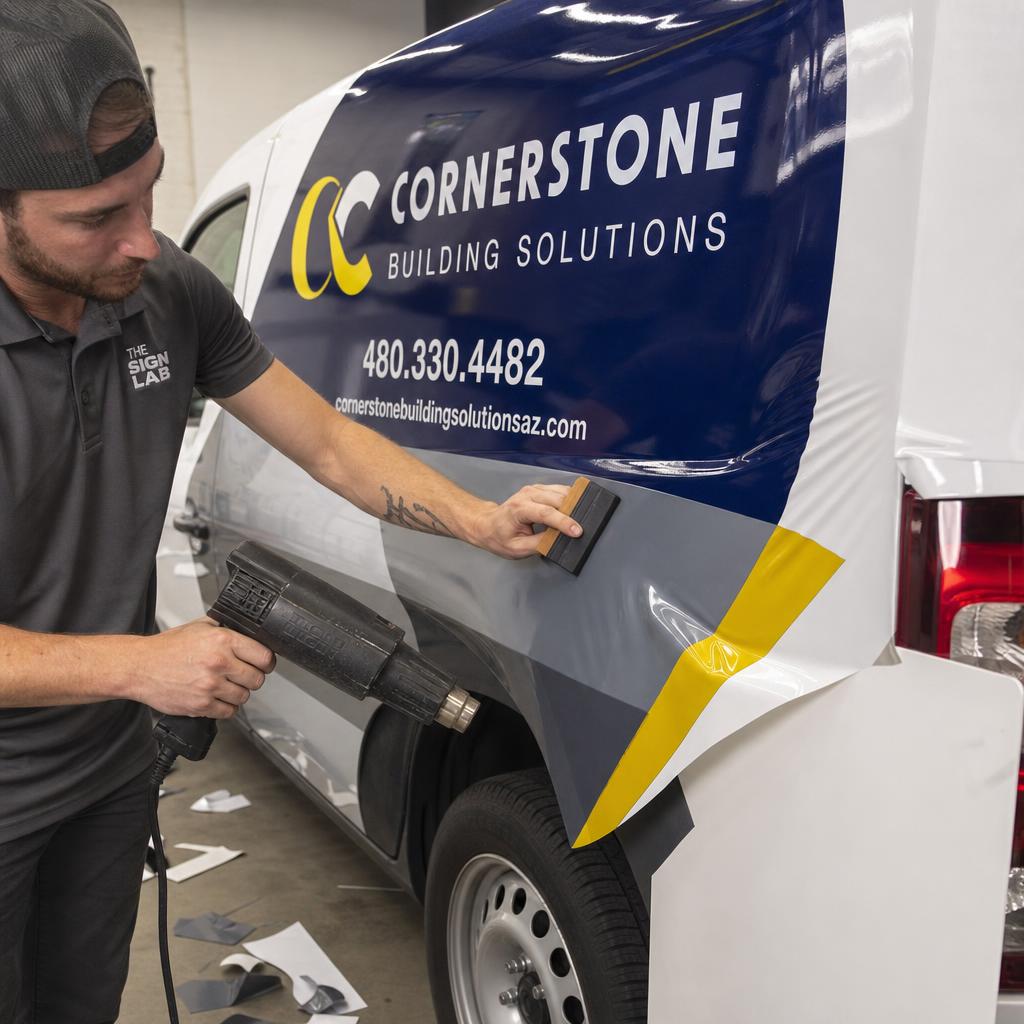
Vehicle wraps turn your business vehicles into mobile billboards, generating thousands of impressions daily while your team goes about their work. In Melbourne's competitive market, wrapped vehicles stand out—and the numbers support the investment.
This guide covers everything Melbourne businesses need to know about vehicle wraps, from installer selection to pricing to measuring return on investment.
Why Vehicle Wraps Work
The Numbers Behind Fleet Branding
Outdoor advertising industry estimates commonly cited for vehicle wraps (actual results vary by route, vehicle count, and market):
- Estimated impressions: 30,000-70,000 per day per vehicle, depending on driving patterns
- Estimated cost per thousand impressions: $0.04-$0.15, often compared favourably against $5-$15 for billboards
- Recall: wrapped vehicles are frequently cited in industry surveys as one of the more memorable outdoor ad formats
- Wrap lifespan: typically 5-7 years with proper care
Benefits Beyond Advertising
Fleet consistency: Uniform branding across all vehicles builds professional image
Asset protection: Wraps protect factory paint from UV damage, chips, and scratches
Resale value: Remove the wrap to reveal preserved original paint at sale/lease return
Flexibility: Change branding or messaging without repainting
Types of Vehicle Wraps
Full Vehicle Wrap
Complete coverage of all exterior painted surfaces, creating maximum impact.
Coverage: 95-100% of painted surfaces (windows excluded)
Price range (Melbourne):
- Small car (Swift, Yaris): $2,500-$4,000
- Sedan (Camry, Commodore): $3,500-$5,500
- SUV (CX-5, RAV4): $4,000-$6,000
- Ute (HiLux, Ranger): $3,500-$5,500
- Van (HiAce, Transit): $4,500-$7,500
- Truck (various): $5,000-$15,000+
Production time: 3-5 days design + 2-4 days installation
Partial Vehicle Wrap
Coverage of selected sections—typically sides, rear, and/or bonnet—with remaining areas in original paint.
Coverage: 30-70% of painted surfaces
Price range (Melbourne):
- Sides only: 40-50% of full wrap cost
- Sides + rear: 55-70% of full wrap cost
- Bonnet + sides: 50-65% of full wrap cost
Best for: Vehicles with suitable original colours, budget-conscious branding
Vehicle Graphics/Decals
Individual graphic elements applied to the vehicle—logos, contact details, key messaging.
Coverage: 5-25% of surface area
Price range (Melbourne):
- Basic logo + contact details: $300-$800
- Multiple graphics/panels: $800-$1,500
- Complex multi-piece graphics: $1,500-$2,500
Best for: Simple identification, tight budgets, leased vehicles with restrictions
Specialty Wraps
Colour change wraps: Transform vehicle colour without painting - Standard colours: $3,000-$6,000 - Premium finishes (matte, satin, chrome): $4,500-$10,000+
Paint protection film (PPF): Clear film protecting high-wear areas - Partial (bonnet, bumpers, mirrors): $800-$2,000 - Full vehicle: $4,000-$10,000
Vehicle Wrap Materials
Cast Vinyl vs Calendered Vinyl
Cast vinyl:
- Premium material designed for vehicle curves and recesses
- Conforms to complex shapes without lifting
- 5-7 year outdoor durability
- More expensive but worth it for full wraps
Calendered vinyl:
- Budget option suitable for flat or gently curved surfaces
- Can lift on complex curves
- 3-5 year outdoor durability
- Appropriate for simple graphics on flat panels
Major Vinyl Brands
Premium (recommended for fleet applications):
- 3M Wrap Film Series 1080/2080
- Avery Dennison Supreme Wrapping Film
- Hexis HX20000
Mid-range:
- Oracal 970RA/975
- Arlon SLX+
Budget (graphics only, not full wraps):
- Oracal 651
- Various Chinese manufacturers
Lamination
All printed wraps should be laminated to protect from UV and abrasion.
Gloss laminate: Shiny, vibrant colours, shows scratches more Matte laminate: Subtle, modern look, hides minor scratches Satin laminate: Between gloss and matte
Finding Melbourne Vehicle Wrap Installers
Melbourne Installer Regions
Inner North (Brunswick, Preston, Fitzroy): Higher concentration of boutique installers, often design-focused
South-East (Dandenong, Mulgrave, Moorabbin): Major commercial wrap facilities, fleet specialists
West (Laverton, Brooklyn, Sunshine): Industrial-scale operations, competitive pricing
Peninsula (Frankston, Mornington): Limited options; most work goes to South-East providers
How to Evaluate Wrap Installers
Portfolio review:
- Ask for photos of similar vehicles to yours
- Request to see completed work in person
- Check quality of corners, edges, and complex curves
Facility inspection:
- Clean, dust-controlled environment essential
- Temperature-controlled for proper adhesion
- Covered wash bay for pre-installation cleaning
Qualifications:
- 3M/Avery/Hexis certified installers have proven skills
- Years of experience matters for complex installs
- Ask specifically about fleet/commercial experience
Warranty:
- Material warranty (from vinyl manufacturer): 5-7 years
- Installation warranty (from installer): 1-3 years
- What's covered? Lifting, peeling, bubbling, fading
Questions to Ask Installers
- What vinyl brand do you recommend and why?
- Is lamination included in the price?
- How long will installation take?
- Do you provide a replacement vehicle?
- What preparation is included?
- How do you handle complex areas (mirrors, handles, bumpers)?
- What's your warranty on installation?
- Do you have fleet pricing for multiple vehicles?
Vehicle Wrap Design Best Practices
Visibility Principles
Contact information: Large, readable from 20+ metres - Phone number minimum 150mm high for highway visibility - Website minimum 100mm high
Keep it simple: Moving vehicles aren't read like stationary signs - Logo + business name + contact = often sufficient - Detailed service lists are rarely read
High contrast: Essential for readability - Dark text on light backgrounds - Light text on dark backgrounds - Avoid low-contrast colour combinations
Design Elements
Logo placement:
- Side doors (visible when parked)
- Rear (visible in traffic)
- Bonnet (only if not overly branded)
Images:
- Large, simple, high-resolution images only
- Busy images become visual noise at speed
- Consider how images work across panel breaks
Templates: Wrap designers should use accurate vehicle templates. Poor template matching results in misaligned graphics across panels.
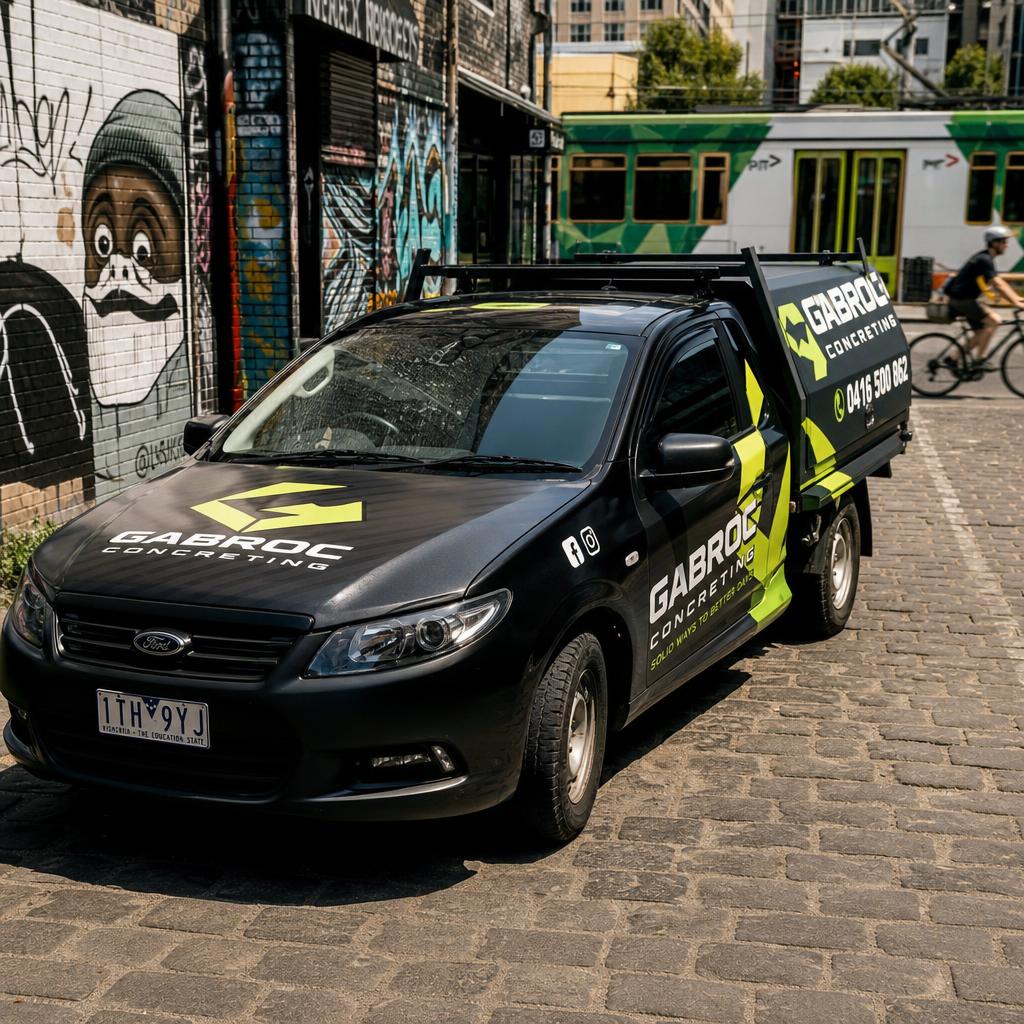
Installation Process
Pre-Installation
Vehicle preparation:
- Thorough wash and decontamination
- Clay bar treatment to remove embedded contaminants
- Isopropyl alcohol wipe-down
- Panel gap cleaning
- Minor dent/damage assessment
Design approval:
- Review proofs on vehicle templates
- Check branding accuracy
- Verify contact information
- Approve print samples
Installation (Full Wrap)
Day 1:
- Final clean and prep
- Remove necessary trim (handles, badges, mirrors)
- Begin major panel application
Day 2-3:
- Complete panel application
- Cut in around edges, handles, seams
- Post-heat all edges for adhesion
- Quality check
Day 4:
- Reinstall trim
- Final inspection
- Touch-ups if needed
- Client inspection and sign-off
Post-Installation Care
First 7 days:
- No pressure washing
- No car washes
- Avoid rain if possible
- Park undercover
Ongoing care:
- Hand wash with mild soap
- Rinse from top down
- No harsh solvents or abrasives
- Wax edges occasionally to prevent lifting
ROI Calculation for Fleet Wraps
Impression Value Method
These figures are commonly-used industry rules of thumb for estimating impression volume, not measured data specific to any one fleet — treat them as a starting point for your own estimate, not a guarantee.
Estimate impressions:
- Urban driving (50km/day): roughly 30,000 impressions, per commonly-cited outdoor advertising estimates
- Highway/arterial (100km/day): roughly 50,000 impressions
- CBD parking: roughly 500 impressions/hour parked
Assign a value:
- Traditional outdoor advertising benchmark: $5-$10 cost per thousand impressions (CPM)
- Conservative vehicle wrap CPM estimate: $0.10
Example ROI calculation (illustrative, not a guaranteed outcome):
- 5-vehicle fleet
- 40,000 impressions per vehicle per day (estimated)
- 250 working days per year
- Total annual impressions: 50 million (estimated)
- Value at $0.10 CPM: $5,000 equivalent advertising value
- Wrap investment: $25,000 (5 vehicles at $5,000 each)
- Wrap lifespan: 5 years
- Cost per year: $5,000
- ROI: 100% annually (equivalent advertising value vs cost)
Conversion Tracking
Track wrap effectiveness by: - Unique phone number on vehicles - Vehicle-specific landing pages - "How did you hear about us?" data - Call/lead volume correlation to vehicle routes
Melbourne-Specific Considerations
VicRoads Regulations
Vehicle wraps are generally permitted provided: - Registration plates remain visible and unobstructed - Lights and reflectors remain functional - No obscuring of safety features
Insurance Implications
Notify your insurer: Most policies cover wraps but require notification
Documentation: Keep invoices and photos for claims
Agreed value: Consider increasing coverage to include wrap value
Climate Considerations
Melbourne weather:
- UV exposure fades unlaminated prints quickly
- Temperature swings can stress poorly installed wraps
- Salt spray near the bay accelerates degradation
Recommendations:
- Premium cast vinyl essential for Melbourne conditions
- Quality lamination non-negotiable
- Choose installers experienced with Melbourne climate
---
Managing a wrapped fleet with digital signage at your locations? SPARC makes it easy to coordinate your vehicle branding with your digital displays for consistent messaging everywhere. Explore SPARC pricing to learn more.
Choosing Between a Full Wrap, Partial Wrap and Decals
Not every vehicle needs a full wrap to make an impact, and picking the wrong format is one of the most common ways businesses overspend or under-deliver on a fleet branding project.
Full wraps cover the entire vehicle, panel to panel, including bonnet, roof and rear doors. They're the right call when the vehicle itself is the primary marketing asset — think a tradie's ute that sits on job sites all day, a delivery van parked outside a busy shopping strip, or a fleet where consistent, unmissable branding across every vehicle matters more than upfront cost. Full wraps also give you the most control over the finished look, since there's no original paint colour showing through to work around.
Partial wraps cover 30-70% of the vehicle — commonly the bonnet, doors and rear panel — while leaving the roof, roof line or lower panels in factory paint. They're a sensible middle ground for businesses that want strong visibility without the full-wrap price tag, and they work particularly well on vehicles with a distinctive body colour worth keeping visible, such as a branded corporate colour already tied to the business.
Cut decals and lettering (business name, phone number, logo, ABN) sit at the lighter end of the spectrum. They're the fastest and least expensive option, suited to vehicles used occasionally for client-facing work, owner-operators testing whether wraps generate enquiries before committing fleet-wide, or businesses where the vehicle spends more time in a depot than on the road.
The right choice comes down to three questions: how often is the vehicle seen by the public, what's the marketing budget relative to the rest of the fleet, and does the existing paint colour help or hurt the brand. A single ute that's constantly parked outside job sites justifies a full wrap. A back-office support vehicle that only leaves the depot for parts runs probably doesn't.
Preparing Your Vehicle for Installation Day and Ongoing Wrap Care
How long it takes:
- A partial wrap — typically a full day
- A full wrap on a van or ute — two to three days, depending on complexity around mirrors, door handles and body lines
Before drop-off, the vehicle needs to be:
- Professionally washed — not a home hose-down. A proper wash removes the road grime and wax residue that stop vinyl bonding properly.
- Free of aftermarket accessories that would have to be removed and refitted
- Carrying at least a quarter tank of fuel, so it is not sitting idle on the installer's floor longer than necessary
Most installers will also want existing signage, decals or old wrap fully stripped and the surface prepped first. Factor that in if you are replacing tired signage rather than wrapping a new vehicle.
A wrap's lifespan depends heavily on how it is looked after. Four rules:
- Hand wash or use a touchless wash. Automatic brush washes are the single biggest cause of premature wrap failure — the bristles lift edges and scratch the laminate.
- Park under cover where possible. Prolonged direct sun accelerates fading.
- Do not let fuel spills sit on the vinyl during refuelling.
- Flag lifting edges or bubbling to the installer early. Most reputable Melbourne installers cover this under workmanship warranty if reported promptly — damage left to spread often is not.
Vehicle wraps Melbourne FAQs
How long does a vehicle wrap installation take?
A partial wrap or decal package usually takes a single day, while a full wrap on a car, ute or van generally takes two to three days. Larger vehicles like box trucks or buses can take longer due to the surface area and additional panel work involved. Your installer should confirm a timeframe upfront based on the vehicle and wrap type.
Will a wrap damage my vehicle's paint?
No, provided it's installed and removed correctly by an experienced installer using quality vinyl. The wrap actually protects the paint underneath from UV exposure and minor scratches during the time it's applied. Issues generally only arise when a low-quality installer uses aggressive heat or leaves a wrap on well past its rated lifespan, which can occasionally cause colour transfer on ageing paint.
Can I still wash my car through a car wash after it's wrapped?
Hand washing or a touchless car wash is fine, but automatic brush washes should be avoided. The rotating bristles catch on panel edges, mirrors and door handles, lifting the vinyl and scratching the laminate finish over time, which shortens the wrap's lifespan considerably.
Do I need council or RMS approval to wrap a business vehicle in Melbourne?
Standard business branding wraps don't require council or VicRoads approval, as they're treated the same as any other vehicle signage. The exceptions are wraps that significantly obscure windows beyond legal tint limits or affect visibility of number plates and lights, which installers are generally well aware of and will avoid during design.
How do I remove a wrap when it's time to rebrand or sell the vehicle?
Removal should always be done by a professional installer, particularly on older wraps, since vinyl left too long can become brittle and take paint clear coat with it if pulled incorrectly. A well-maintained wrap removed within its rated lifespan typically comes off cleanly, leaving the original paint underneath in the same condition it was in when wrapped.
Can a wrap be repaired if part of it gets damaged?
Yes, most installers can patch or replace an individual panel without redoing the entire wrap, provided they kept records of the original vinyl batch and colour match. Panel replacement is far cheaper than a full re-wrap and is worth asking about upfront, since colour and material can shift slightly between production runs.
Is it worth wrapping a leased vehicle?
Wraps are commonly applied to leased fleet vehicles and, unlike paint changes, they're fully reversible without affecting the vehicle's resale or lease-return condition when removed correctly. Most leasing companies have no issue with wraps as long as removal happens before the vehicle is returned, though it's worth checking the specific lease terms first.